*This blog was updated October 2026
Sometimes we need a reality check. Moments that happen when we unplug and forget about the outside world are authentic and unfiltered. How often do you get to enjoy those moments? If you are like most people in the world today, my guess is not nearly enough. If you are looking to unplug for a few days, I highly recommend looking no further than the Dry Tortugas National Park, west/ southwest of Key West in the Florida Keys, to say that these islands are off the beaten path would be an understatement! Enter the perfect place to log out and live…
Getting There
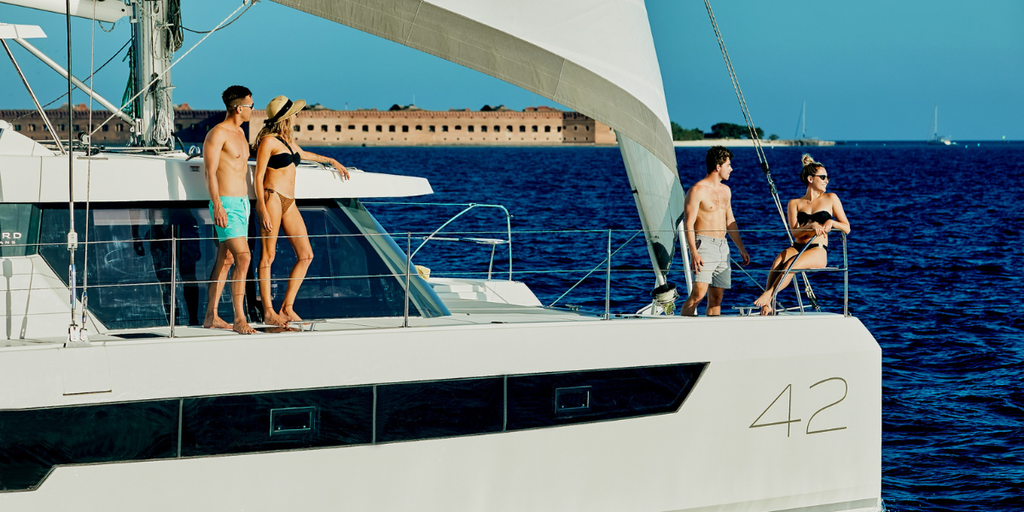
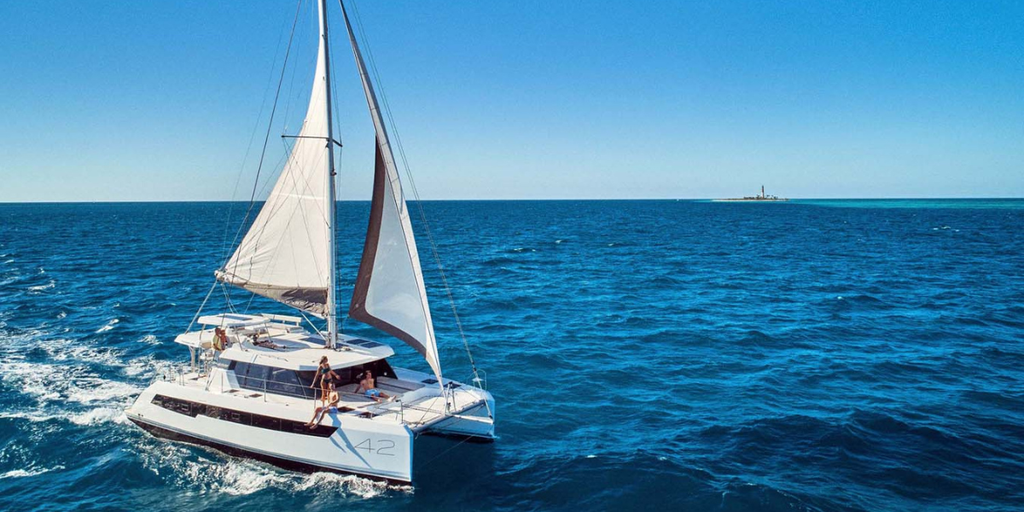
The trip down to the Dry Tortugas took about 32 hours sailing on a Leopard 42 from Fort Lauderdale. The winds were favorable and we took advantage. We flew the Code 0 and maintained a decent broad reach, with a little motorsailing here and there, for most of the trip down. You tend to forget the beauty of the water surrounding the Keys until you experience them again. They induce a feeling of bliss. With a crew of three, the night watches went by quickly and peacefully.
We knew we were headed in the right direction when we were able to see the slow reveal of a massive coastal fortress known as Fort Jefferson. I came to find out later that Fort Jefferson is the largest brick masonry structure in the Americas and is composed of over 16 million bricks.
Bye-Bye to Wi-Fi… and Everything Else
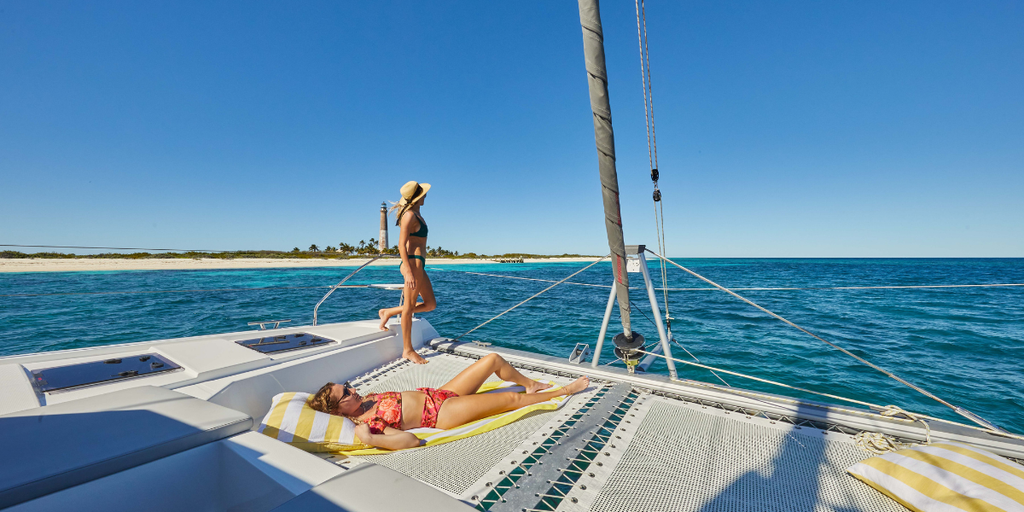
Once you are far enough away from Key West, as you journey to the Dry Tortugas, you will notice that your cell service completely vanishes. Our group decided this was the best thing that could have happened. While we had all intentions of unplugging, are you ever really unplugged when you have steady access to your phone and internet? Can you remember the last time you turned your phone off for a full 24 hours? Neither could I, until just a few weeks ago! In a time when outside noise is louder than ever, solitude will keep you grounded. Once we had all accepted we would be “off the grid,” we welcomed the opportunity with open arms.
In addition to no cell towers or public Wi-Fi, you will find no freshwater, fuel, shops, or lodging, so provisioning and water usage are vital. When we said off the grid, we meant it! Consider Murphy’s Law and be sure to bring more supplies than you intend on using. The National Park Service recommends carrying at least one additional day’s worth of food and water, with a suggested allowance of two gallons of water per person per day.
Where to Drop the Hook?
Garden Key, the island where Fort Jefferson is located, offers a designated anchorage in the surrounding waters. During our visit, we found a sandy-bottom anchorage southeast of the island, where the sunsets were stunning. It was the perfect time of year for grilling on the aft deck while we watched the sun go down.
For boaters planning a visit today, overnight anchoring is permitted only in sandy-bottom areas within one nautical mile of the Garden Key lighthouse, outside designated channels and restricted areas. In Garden Key Harbor, vessels must remain south or southeast of the marked boundary extending from channel marker No. 12 toward the westernmost “Off Limits” buoy near Bush Key. Anchoring is prohibited throughout the park’s Research Natural Area, and anchored vessels may not be left unattended for more than four hours. Be sure to consult current nautical charts, weather conditions, and National Park Service regulations before selecting your anchorage.
One evening, we were treated to an unforgettable sight: one of the biggest Goliath Groupers any of us had ever seen swimming beneath the boat. It stayed nearby for much of the evening, giving us an incredible opportunity to observe marine life in its natural habitat. Visitors should note that underwater vessel lights are now prohibited within Dry Tortugas National Park, making this the perfect place to enjoy the natural beauty of the water after dark.
Do I Need to Clear In?
Yes. Private boaters are required to obtain a free recreational boating permit through the park’s registration process at Garden Key before participating in recreational activities. Even if you are not planning to visit Fort Jefferson, you must comply with the park’s boating permit requirements.
While the boat permit is free, there is an entrance fee of $15 per person ages 16 and older, valid for seven consecutive days. Private boaters are encouraged to purchase their entrance passes in advance through Recreation.gov, as there is no reliable cell service or Wi-Fi at the park. Dry Tortugas is cashless, so visitors should not plan to pay with cash upon arrival.
For the latest information, visit the National Park Service’s boating and permit guidelines.
Discover Loggerhead Key
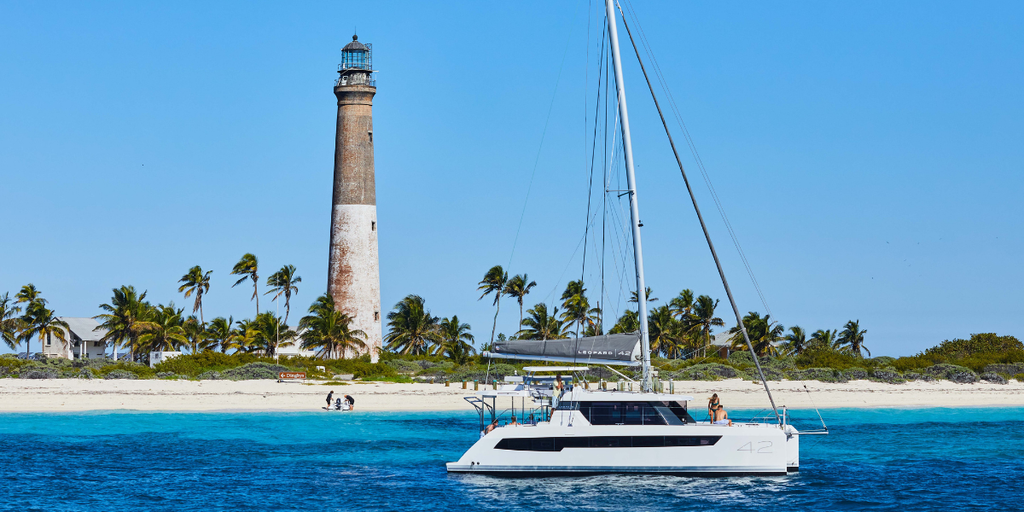
Just three miles west of Garden Key is the secluded Loggerhead Key. It is worth the trip! One thing you should know before you go is that anchoring is strictly prohibited within the Research Natural Area surrounding Loggerhead Key. During our visit, we learned firsthand how important it is to understand the park’s anchoring restrictions when a park ranger stopped by.
Today, designated mooring buoys are available in the Research Natural Area for daytime recreational use, subject to availability and a maximum stay of two hours. These moorings cannot be used for overnight stays. If you are planning to explore Loggerhead Key, another option is to take your dinghy from Garden Key, provided weather and sea conditions are favorable. Visitors must use the designated dinghy landing area, as the island’s dock is reserved for authorized government vessels. Loggerhead Key is open for day use only, and visitors must obtain the required permit at Garden Key before visiting.
We laid out on the beach, had lunch, explored the area around the lighthouse (you can’t go inside it), and then made our way to another side of the island where we discovered a house split down the middle (no photos, unfortunately) and pristine waters to snorkel. Be careful of glass on this beach—shoes are highly recommended when exploring this island! Visitors should also remain on designated paths and observe posted closures to protect the island’s wildlife and historic structures. After making our way back to the boat, we sailed back to Garden Key and anchored up for the evening.
Spending the Day at Garden Key
On Garden Key, much of the island is occupied by Fort Jefferson. Garden Key is home to the Dry Tortugas park headquarters, campgrounds, and beautiful beaches for swimming and snorkeling. Fort Jefferson was once used as a military prison during the 19th century. The fort dominates Garden Key with its impressive brick walls, surrounding moat, and historic walkways. We hiked to the top to take in the surrounding views of Garden Key, Bush Key (which was closed for bird nesting season), and the surrounding shades of aqua blue and green water.
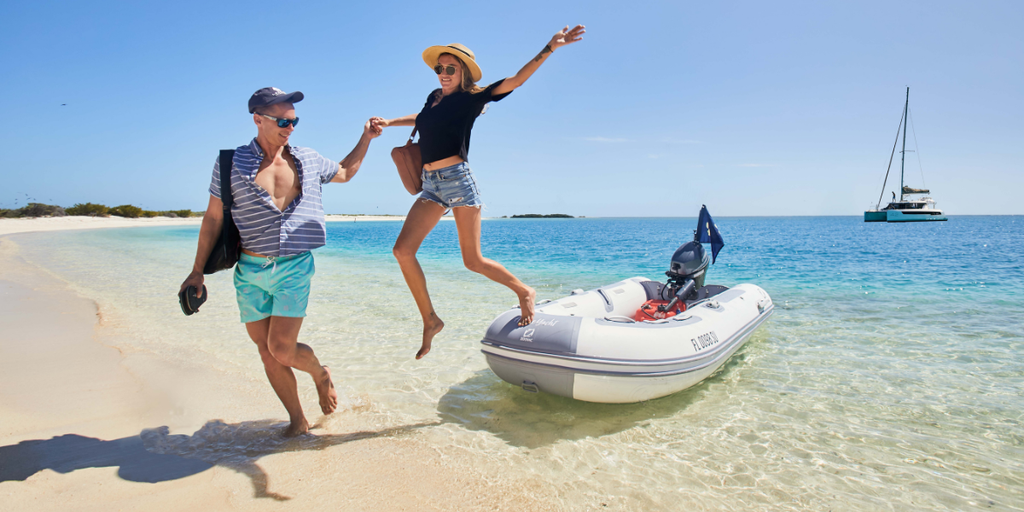
Sandy beaches cover parts of the island. The water was crystal clear and blue as a diamond. Lying on the beach, soaking up the sun, and looking at the historic Fort Jefferson made for a perfect day of exploring and relaxation. Make it a point to spend a full day here exploring and then relaxing. Keep in mind that some areas of Garden Key, including portions of the docking facilities, may be closed or restricted, so check current park notices before arriving by private boat.
Diving and Snorkeling
It is undoubtedly agreed upon that the Dry Tortugas offers some of the best diving in the continental U.S. The clarity and visibility are outstanding. One of the most popular spots to dive is the Windjammer Wreck. With relatively shallow depths, this is an ideal location for groups interested in both snorkeling and diving, depending on conditions. This three-masted sailing ship wrecked on Loggerhead Reef in 1901 and has since become an artificial reef, attracting fish of all shapes, sizes, and colors. The wreck lies within the Research Natural Area, so visiting boaters must use an authorized day-use mooring rather than anchor.
If you prefer snorkeling, you won’t miss a beat in the Dry Tortugas. On the day you spend at Loggerhead Key, be sure to check out Little Africa, a great reef to snorkel when conditions are suitable. The name comes from the reef taking on the shape of the continent of Africa.
Another point of interest for our group was snorkeling the moat wall. While snorkeling in the moat is prohibited, designated waters outside the wall offer an intriguing blend of historic surroundings and marine life. Be sure to use designated swimming and snorkeling access areas, as entering or exiting the water directly from the moat wall is prohibited. We also chatted with some folks in our anchorage who were planning to dive the wall in the evening. They shared that night diving brings out different sea life and a more intimate experience. Visitors considering night diving should review current park restrictions, as some nighttime activities require additional permits.
Our crew stuck to snorkeling on this trip, but if you want to explore the underwater world and dive the many sites in the Dry Tortugas, there are plenty of resources online, including the park website, to research before your visit.
Homeward Bound
After a few days living in a blissful paradise, it was time to raise the sails and head back towards civilization. Being in a time crunch, unfortunately for us, we were not able to wait for a weather window, and thus, our sail back to Key West was not what we had hoped for. Some of our novice sailors grew sea legs as we sailed through the night to arrive in Key West at the break of dawn. Plenty of daylight to explore Duval Street and eat pound after pound of stone crab! If only time had been on our side…