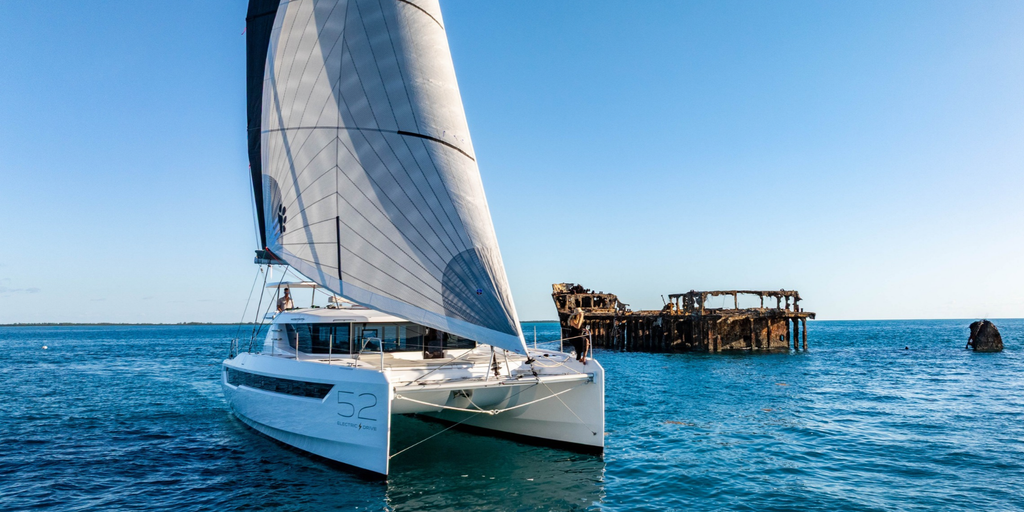
A good sailing catamaran keeps sailing when the wind drops. Leopard designs its catamarans to do that without giving up the space and comfort owners expect aboard.
There is a point on almost every passage when the wind dies down and you have to decide: keep sailing or start the engines. On a cruising catamaran, that decision is shaped long before the boat touches the water, by hull shape, weight, rig proportions, sail area, deck hardware and helm position. Leopard builds sailing catamarans for owners who want to live aboard comfortably and still want to sail. This article explains how the Leopard 43, 46 and 52 are designed to do both.
Key Takeaways
- Stepped hulls keep the waterline narrow while adding living volume above it.
- Each new-generation sailing model adds sail area over the model it follows: 12% more upwind sail area on the 43, 12% more sail area on the 46 with standard sails and 17% more upwind sail area on the 52.
- Helm stations are designed for single-handed sailing.
- Performance, volume and comfort are designed together, not traded against each other.
How Leopard Hull Design Supports Sailing
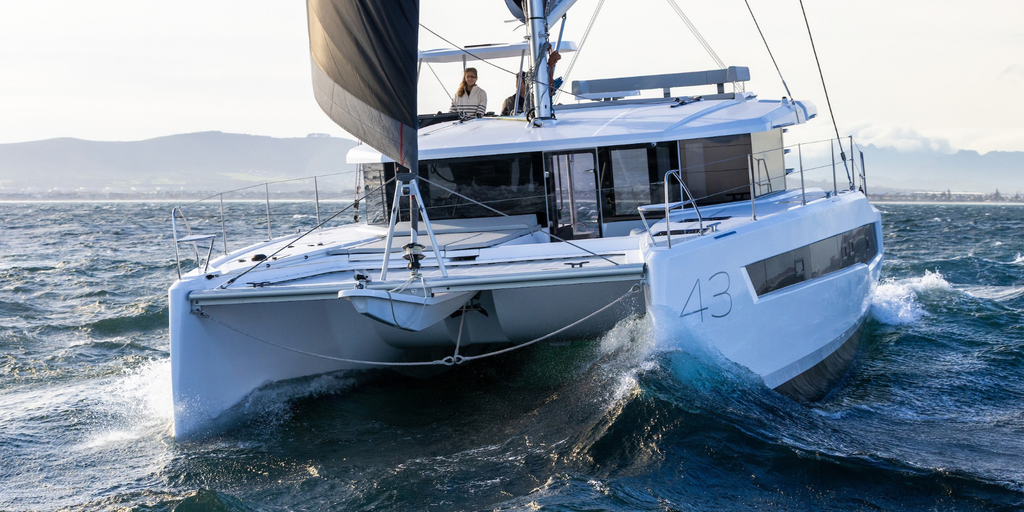
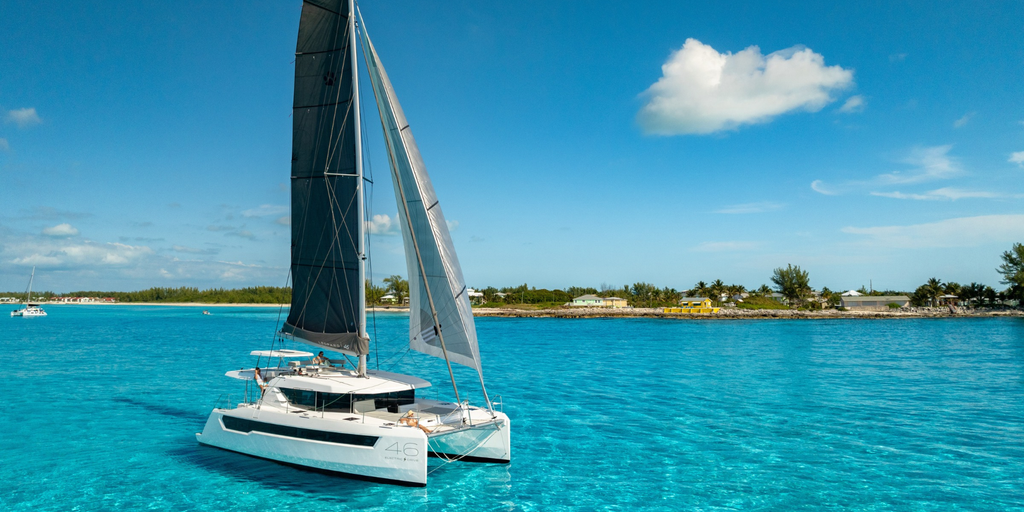
Owners want more interior space, but adding volume means more hull moving through the water. Leopard’s stepped hulls address both. The hull stays narrow at the waterline, where shape has the most effect on efficiency, and the step adds volume higher up, where it becomes living space. The Leopard 43 goes further with a wave-piercing hull and reverse bows, which improve power, efficiency and handling across a wide range of conditions.
See what else has changed in our closer look at what makes the new Leopard 43 different.
Why Sail Area Matters in Light Air
Light air is where a cruising catamaran shows what it was designed to do. With little breeze, a boat needs enough sail area to get moving and keep moving. Without it, the engine goes on.
That is the reason behind Leopard’s rig choices: a powerful rig with an overlapping genoa, a large mainsail and a long boom. Together, the rig and deck hardware take up space and budget that could go elsewhere. We make those choices because they shape how the boat sails.
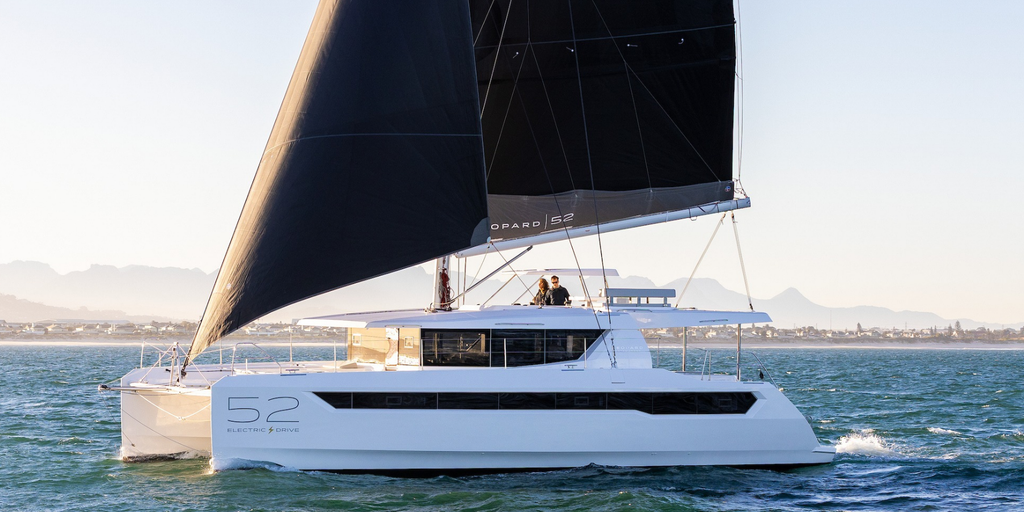
Each new-generation model adds sail power over the one it follows, as the table below shows. The aim is not to turn cruising boats into racing boats. It is to make sailing the obvious choice when the breeze is there.
| Model | Compared with | Sail plan change | Also designed for |
| Leopard 43 | Leopard 42 | Mast three feet taller; 12% more upwind sail area | Wave-piercing hull and reverse bows |
| Leopard 46 | Leopard 45 | Taller mast; 12% more sail area with standard sails, 15% with the performance package | Radial-cut aramid sails (performance package); lines, winches and instruments within reach of the helm |
| Leopard 52 | Leopard 50 | Longer mast and boom; 17% more upwind sail area with equivalent sails | CFD-refined hull; protected helm |
How Hull and Rig Work Together
The development of the Leopard 52 shows how connected these decisions are. Naval architects Simonis Voogd Design used computational fluid dynamics (CFD) to refine the hull, working to reduce pitching while managing the resistance that comes with volume in the bow and stern. The team also evaluated weight distribution, center of gravity, bridgedeck height and keel position to improve stability, seakeeping and maneuverability.
That work made room for a larger rig.
“The larger rig is highly beneficial in lighter conditions when more sail area is needed to get going at a decent pace. We really expect less motoring and more sailing on the 52.”
— Alexander Simonis, Simonis Voogd Design
When there is enough breeze to sail, the boat should give you a reason to use it.
Can a Leopard Catamaran Be Sailed Single-Handed?
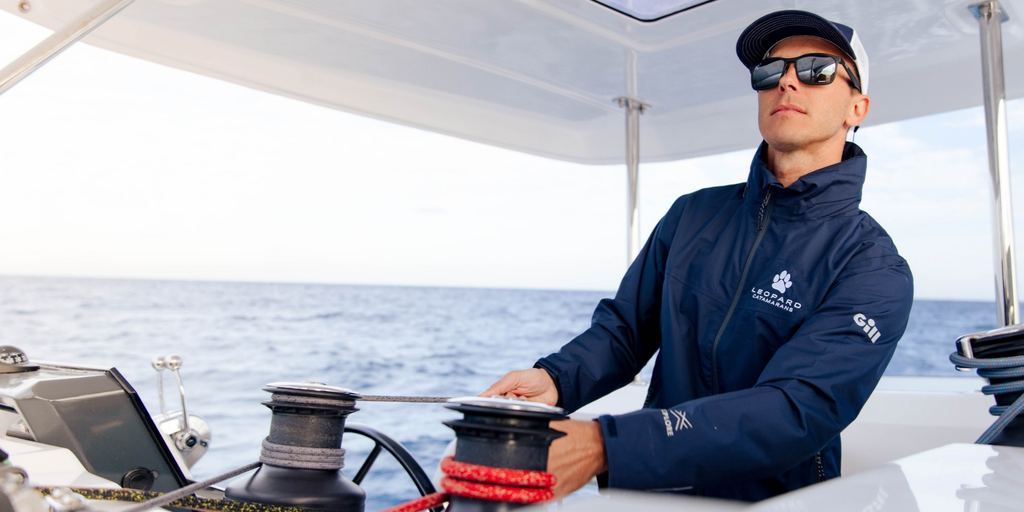
Performance is not useful if using it takes a full crew. The helm stations on the Leopard sailing range are designed so the boat can be sailed single-handed.
The Leopard 43, Leopard 46 and Leopard 52 share the same helm philosophy, and each of the three has all of these features. Lines, winches and instruments are within reach of the helm. The helm is protected, which keeps visibility clear and puts the controls where they can be managed efficiently. And the helm sits close to the social space, so the person steering stays part of the group.
That matters because cruising is rarely about getting the maximum from a boat for an hour. It is about sailing comfortably for an afternoon, an overnight passage or several days, even for owners and charter guests who do not sail every day.
For a real-world perspective, read what Leopard owners learned over 25,000+ miles of cruising, including 5,000 miles aboard a Leopard 46.
Do You Have to Choose Between Sailing Performance and Comfort?
No. People live on these boats. They cross oceans, spend weeks at anchor, work aboard and cruise with family. A better sailing catamaran does not mean treating those priorities as secondary.
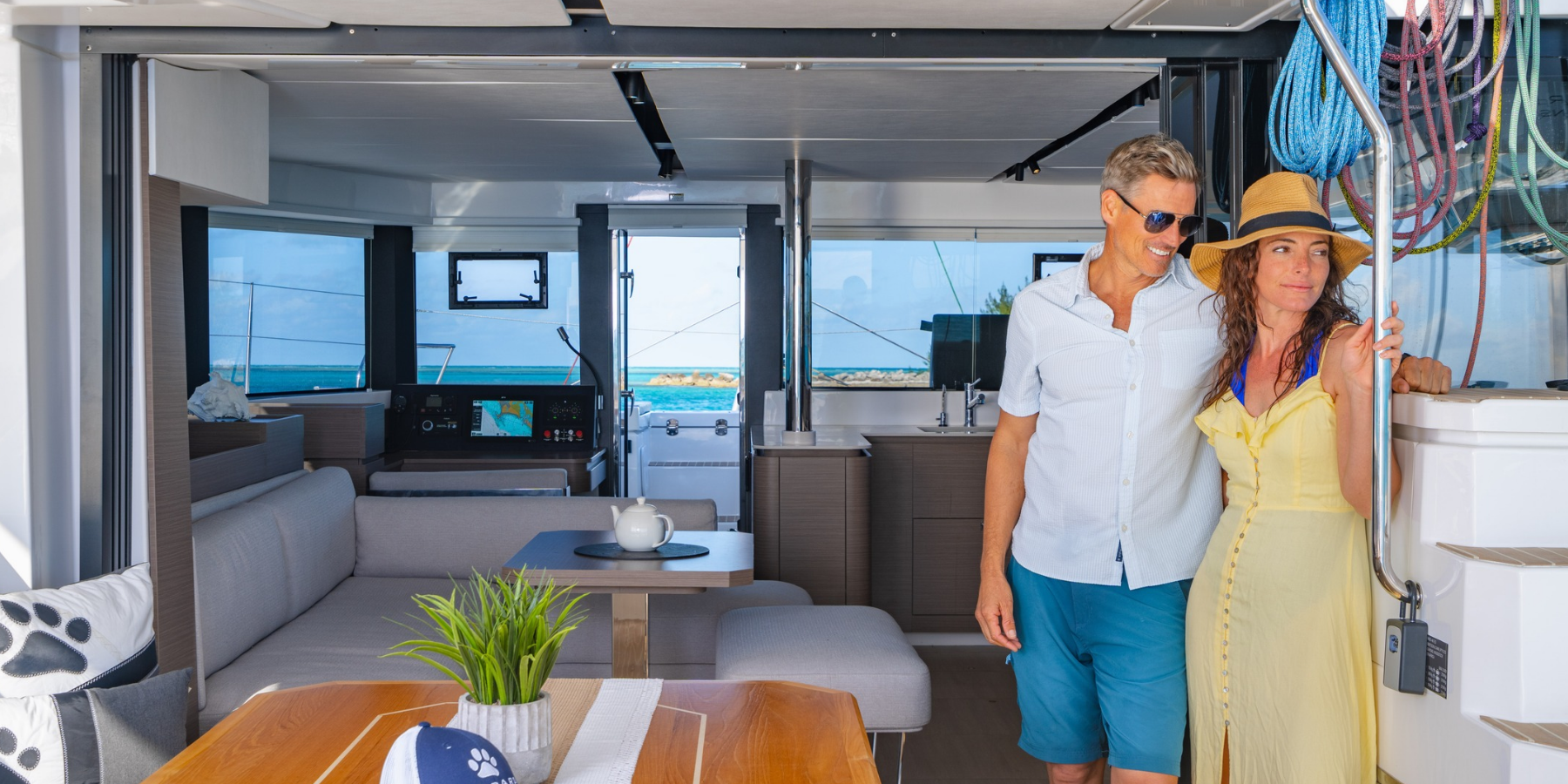
All three boats have social space close to the helm. Their saloon and aft cockpit work as one space with the companionway open and as two separate spaces when it is closed, a layout first introduced on the Leopard 46. Beyond that shared layout, each boat has its own strengths. The Leopard 43 pairs its larger rig with panoramic glazing and can be configured with a dedicated owner stateroom in the entire starboard hull. The Leopard 46 adds an optional utility space for laundry, an office or a workshop. The Leopard 52 offers layouts from three cabins plus a utility room to six cabins.
The goal is not performance instead of comfort. It is to protect the sailing experience while improving life aboard.
Leopard Sailing Catamarans: Common Questions
Are Leopard catamarans good for sailing?
Yes. Leopard designs its sailing catamarans around stepped hulls with a narrow waterline, powerful rigs with an overlapping genoa and helm stations designed for single-handed sailing. The 43, 46 and 52 each add sail area over the models they follow.
How do Leopard catamarans perform in light air?
Larger rigs and more sail area are meant to keep the boat moving when the breeze softens. Of the 52, designer Alexander Simonis says the larger rig will be highly beneficial in lighter conditions.
Do Leopard sailing catamarans give up comfort?
No. The 43, 46 and 52 combine larger sail plans with connected living spaces and social areas close to the helm.
Why Choose a Leopard Sailing Catamaran
There are plenty of reasons people choose cruising catamarans. Space, stability, privacy and shallow draft all matter. Sailing should be one of them.
A feature only tells you so much. What matters is why it is there, and every choice on the 43, 46 and 52 comes back to the same idea: a cruising catamaran can offer generous living space and still be a boat you want to sail.
We build boats to be lived on because cruising demands it. We build them to be practical and manageable because real owners and crews use them.
And we keep working on hulls, rigs, sail plans and helm layouts because there will always be that moment when the breeze fades and you decide whether you really need to start an engine.
We would rather give you a reason not to.