Watch the full Ask a Leopard Owner webinar with Jonathan Zuk, a two-time Leopard owner who has sailed more than 30,000 nautical miles and completed three Atlantic crossings aboard his Leopard 40 and Leopard 45.
Jonathan Zuk learned to sail in 2016 with a goal many sailors spend a lifetime dreaming about: sailing around the world.
Since then, he has owned both a Leopard 40 and a Leopard 45, crossed the Atlantic Ocean three times, cruised throughout the Mediterranean, and logged more than 30,000 nautical miles. Along the way, he has learned valuable lessons about preparation, crew selection, offshore passage making, and choosing the right boat for long-term cruising.
Watch the full webinar above, or continue reading for some of Jonathan’s biggest takeaways from life aboard Leopard catamarans.
Key Takeaways from Our Conversation with Jonathan Zuk
During this Ask a Leopard Owner webinar, Jonathan shared insights on:
- Learning to sail as an adult
- Why he chose Leopard not once, but twice
- Upgrading from a Leopard 40 to a Leopard 45
- Crossing the Atlantic Ocean three times
- Finding and managing offshore crew
- Preparing for long-distance passages
- Sailing solo safely
- Choosing the right boat for your cruising goals
From New Sailor to Three-Time Atlantic Crosser
Unlike many long-distance cruisers, Jonathan did not grow up sailing.
After deciding he wanted to pursue a life of cruising, he completed his ASA sailing certifications and began building experience on the water.
“Sailing school gave me the foundation, but the real learning happened after I got on the boat. You have to get out there, make mistakes, learn from them, and keep going.”
Today, those early lessons have evolved into more than 30,000 nautical miles of cruising experience across multiple continents and three Atlantic crossings.
Jonathan credits much of that success to simply getting started.
“Don’t be afraid to try. It’s fiberglass. You can fix it. The most important thing is to get out on the water and gain experience.”
Why Jonathan Chose Leopard
When evaluating cruising catamarans, Jonathan approached the process the same way many prospective owners do today: extensive research.
After comparing different brands and layouts, Leopard stood out for several reasons.
“The Leopard came out on top in all the things that were important to me. The reputation, the fact that it was ocean-going, the forward cockpit, and the way everything runs back to the helm.”
For Jonathan, the ability to comfortably manage the boat with a small crew was especially important.
“One person can control the boat very easily, and that makes all the difference in the world.”
The forward cockpit was another major factor. While sailors understandably focus on performance underway, cruisers spend much of their time at anchor. The additional living space and airflow provided by Leopard’s signature forward cockpit design made a meaningful difference in day-to-day comfort.
Why He Upgraded from a Leopard 40 to a Leopard 45
After several years aboard his Leopard 40, Jonathan upgraded to a Leopard 45.
The decision wasn’t driven by dissatisfaction with the Leopard 40. In fact, he still speaks highly of the boat that carried him across two oceans.
“The Leopard 40 was an excellent boat. We completed two Atlantic crossings and thousands of miles aboard her.”
But as his cruising plans evolved, so did his requirements.
Long-term cruising naturally led to additional gear, tools, provisions, paddleboards, kayaks, and visiting family members. Eventually, more space became desirable.
“I decided to stick with what I knew and liked. The Leopard 45 is a bigger, wider boat that was better suited for my goal of eventually circumnavigating.”
The additional length and beam also created a noticeably smoother ride offshore.
“The Leopard 45 handles big water better. It’s a smoother, more comfortable ride offshore.”
Three Atlantic Crossings and Thousands of Miles of Experience
Over the years, Jonathan completed three Atlantic crossings, each providing its own unique challenges and rewards.
His first crossing took him from Florida through the Bahamas, Bermuda, the Azores, and eventually Spain.
The second crossing followed the classic “Coconut Run” route from the Canary Islands to the Caribbean, a route many cruisers consider one of the most enjoyable ocean passages in the world.
The third crossing may have been the most memorable.
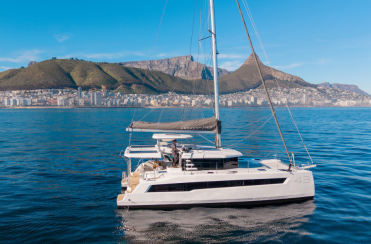
Taking delivery of his Leopard 45 in South Africa shortly before COVID-19 lockdowns began, Jonathan found himself confined to Cape Town for months while waiting for permission to depart.
Eventually, after securing the necessary approvals and assembling a crew, he departed South Africa and sailed more than 5,600 nautical miles across the South Atlantic to the Caribbean.
“From the time we left Cape Town until we arrived in St. Vincent 35 days later, we saw virtually nobody. No cruise ships. Very little commercial traffic. It was a unique experience.”
Despite the challenges, the voyage also served as the ultimate shakedown cruise for his new Leopard 45.
Jonathan’s Approach to Passage Planning
Ask Jonathan to summarize successful cruising in a single concept and he’ll point to what he calls the PET Method.
“Plan. Execute. Tidy up. Everything you do on a boat follows that process.”
For long-distance passages, preparation becomes increasingly important.
Jonathan divides planning into several categories:
- Safety equipment
- Weather routing
- Food and provisioning
- Communications
- Spare parts and tools
- Crew planning
- Recreation and morale
For offshore passages, provisioning often requires more food than many sailors initially expect.
“If you’re planning a 35-day passage, provision for 60. You never know what will happen.”
Perhaps surprisingly, one of Jonathan’s biggest concerns offshore isn’t weather.
“What am I afraid of most? Not having the right tool or equipment to fix something that breaks. When you’re a thousand miles from anywhere, it’s up to you to solve the problem.”
Choosing the Right Crew
While sailing experience is valuable, Jonathan believes something else is even more important.
“The social side matters more than most people realize.”
During extended offshore passages, compatibility, reliability, and responsibility often matter more than advanced sailing skills.
“I don’t necessarily need expert sailors. I need people who are responsible, show up for their watches, contribute to the team, and can live well with others in a small space.”
Whether finding crew through sailing schools, yacht clubs, referrals, or cruising networks, Jonathan’s focus remains the same: choose people who will positively contribute to the overall experience.
Sailing Solo on a Leopard
Jonathan has also completed numerous solo passages aboard both his Leopard 40 and Leopard 45.
For sailors considering solo cruising, his advice is simple.
“Do everything earlier, easier, and faster.”
That means reefing sooner, planning farther ahead, and avoiding unnecessary risks.
Because all lines are led back to the helm, Jonathan finds both boats highly manageable when sailing alone.
“The boats themselves are very easy to handle solo. It’s only when a problem develops that an extra set of hands becomes valuable.”
One Piece of Advice for Future Cruisers
After crossing oceans, cruising multiple continents, and owning two Leopards, Jonathan’s most important lesson isn’t about sail plans, equipment, or weather.
It’s about defining your own cruising goals.
“One size does not fit all.”
Some sailors spend most of their time in marinas. Others anchor for months at a time. Some dream of circumnavigating, while others simply want to enjoy weekends on the water.
“Decide what kind of sailor you want to be and what kind of cruising you want to do. Then match the boat and equipment to that goal.”
It’s simple advice, but after 30,000 nautical miles and three Atlantic crossings, it’s advice earned through experience.
More Ask a Leopard Owner Stories
Jonathan’s journey is just one of many remarkable experiences shared by Leopard owners around the world.
For more firsthand cruising stories, practical advice, and owner experiences, explore the complete Ask a Leopard Owner collection.