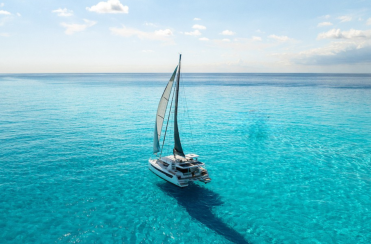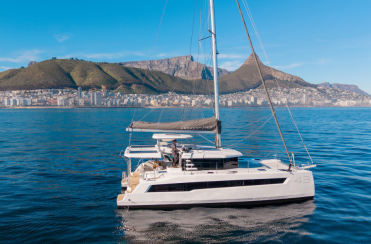
What if you bought a catamaran and started sailing around the world with your family?
That’s exactly what Natalie and Moritz did.
The German couple sold their home, embraced a life of travel, and eventually moved aboard a Leopard 39 with their two children. Since then, they’ve crossed the Mediterranean, sailed to the Canary Islands, visited West Africa, crossed the Atlantic, and explored the Caribbean, logging more than 12,000 nautical miles along the way.
Perhaps the most remarkable part of their story is that they had virtually no sailing experience before buying the boat.
In this edition of Ask a Leopard Owner, Natalie and Moritz share how they learned by doing, what life aboard is really like with children, and why their Leopard 39 has become the foundation for a completely different way of life.
Buying a Boat Before Knowing How to Sail
Most sailors spend years building up experience before purchasing a cruising catamaran.
Natalie and Moritz took a different approach.
“We had only spent three days on a sailboat before we bought our Leopard.”
After deciding they wanted to pursue long-term travel, they began researching catamarans that could safely support a family of four for years of cruising.
They looked at several boats before discovering Leopard.
“We asked experienced cruisers for recommendations for a boat that could handle a circumnavigation, and everyone kept saying Leopard.”
Eventually they connected with another German family selling their Leopard 39.
The fit was perfect.
Two and a half years later, they’re still cruising aboard the same boat.
Learning While Living Aboard
The early days weren’t always smooth.
Only two months after buying the boat, a storm broke a mooring line and pushed their Leopard into another vessel.
The damage was minor, but the experience was unforgettable.
“I thought we had destroyed our dream in one night.”
Instead, the incident became an important lesson.
After repairs were completed, they realized how durable the boat really was.
“It actually gave us confidence because we saw how strong the boat was.”
From that point forward, they continued learning through experience, building skills with every passage.
A Journey Across Europe, Africa, and the Caribbean
Their route so far has covered an impressive range of destinations.
Starting in Greece, they cruised through:
- Greece
- Italy
- Spain
- Madeira
- The Canary Islands
- Gambia
- Cape Verde
- The Caribbean
Today, after more than 12,000 nautical miles, they’re still taking their time.
“We don’t have an end date. We travel as long as we enjoy it.”
Rather than rushing from destination to destination, the family prefers slow travel, spending extended periods of time getting to know each place.
Why They Chose a Leopard 39
Although much of the conversation around newer catamarans focuses on layouts and luxury features, Natalie and Moritz appreciate something different.
For them, the beauty of the Leopard 39 is its practicality.
Easy Access to Systems
One feature Moritz continually praises is how easy the boat is to service and maintain.
“Everything is accessible and everything is labeled.”
Whether running new cables, troubleshooting electrical systems, or making upgrades, the boat is designed to be worked on without dismantling entire sections of the interior.
“You can access almost every part of the boat really easily.”
Thoughtful Documentation
The labeling of electrical systems, plumbing, wiring, and equipment has been especially valuable for owners who learned much of their boat knowledge through hands-on experience.
“Everything is documented. It makes finding and understanding systems much easier.”
Dinghy Davits
One of the family’s favorite everyday features is also one of the simplest.
“The electric dinghy davits are pure luxury.”
Because they launch and retrieve the dinghy multiple times a day, the system saves significant effort and makes daily life more convenient.
Turning a Former Charter Boat Into a Home
When Natalie and Moritz purchased their Leopard 39, it had previously been operated as a charter boat.
While functional, it didn’t initially feel like a permanent home.
So they started making changes.
One of the first upgrades was replacing the original tables with handcrafted wood alternatives.
“It immediately made the boat feel more like a home.”
They also removed the original gas oven and replaced it with an electric oven powered by the boat’s battery system.
The switch eliminated the hassle of trying to refill different propane cylinders in different countries.
Additional storage improvements throughout the cabin helped maximize space for books, equipment, school materials, and everyday living.
Homeschooling While Cruising
For many families considering life aboard, education is one of the biggest questions.
Natalie and Moritz take a flexible approach.
Rather than following a rigid classroom schedule, they build lessons around experiences and locations.
When they visited Gambia, they explored the history of the slave trade.
When they arrive in a new country, they incorporate language learning, culture, geography, and history into daily life.
“We try to teach through experiences and things the children are interested in.”
Learning happens everywhere.
Math might involve provisioning calculations.
Writing could be a daily travel journal.
Science might happen while snorkeling, diving, or exploring a new ecosystem.
Most importantly, the children are involved in planning their own learning.
“We ask our kids where they want to go and what they want to learn.”
Raising Kids in the Cruising Community
One concern many prospective cruising families have is socialization.
According to Natalie and Moritz, that hasn’t been a problem.
In the Caribbean especially, they’ve found an active network of cruising families connected through WhatsApp groups, local meetups, and community activities.
“Kids need kids.”
Family cruising often involves adjusting plans based on friendships rather than destinations.
Sometimes the family stays longer in a location simply because the children have made strong connections with other cruising kids.
“Not every decision is about where we want to go. Sometimes it’s about where the kids are happy.”
Provisioning Lessons From Around the World
After years of moving between countries and continents, they’ve also learned a few lessons about provisioning.
One of the biggest surprises was how much understanding food storage matters on a boat.
Different fruits and vegetables affect one another’s shelf life, and proper storage can dramatically extend freshness during longer passages.
They’ve also learned to embrace local food rather than trying to duplicate what they ate at home.
“You learn much more about a culture when you buy and cook local food.”
The Leopard Community Advantage
Like many Leopard owners, Natalie and Moritz highlight the value of the owner community.
The connections started almost immediately after purchasing the boat.
One of the first cruising families they met in Greece also owned a Leopard.
That chance meeting turned into a lasting friendship.
Over the years, they’ve crossed paths repeatedly throughout Europe and the Caribbean.
“The Leopard community is incredibly helpful.”
Whether through owner groups, social media, or chance encounters in anchorages, they’ve always found someone willing to share advice and support.
While Natalie and Moritz cruise aboard a Leopard 39, sailors exploring today’s Leopard sailing catamaran lineup may also be interested in the Leopard 43.
Advice for Future Cruisers
When asked what advice they would give to others dreaming of life aboard, their answer is refreshingly simple:
“If you have a dream, work on it.”
They are also honest about the realities.
Cruising isn’t always easy.
There are repairs, logistical challenges, unexpected costs, and difficult days.
But in their view, the rewards far outweigh the difficulties.
“We’ve watched our children grow up. We haven’t missed those moments.”
For Natalie and Moritz, that’s what makes the entire adventure worthwhile.
More Ask a Leopard Owner Stories
For more firsthand cruising stories, owner experiences, and practical advice from Leopard owners around the world, visit the Ask a Leopard Owner hub.