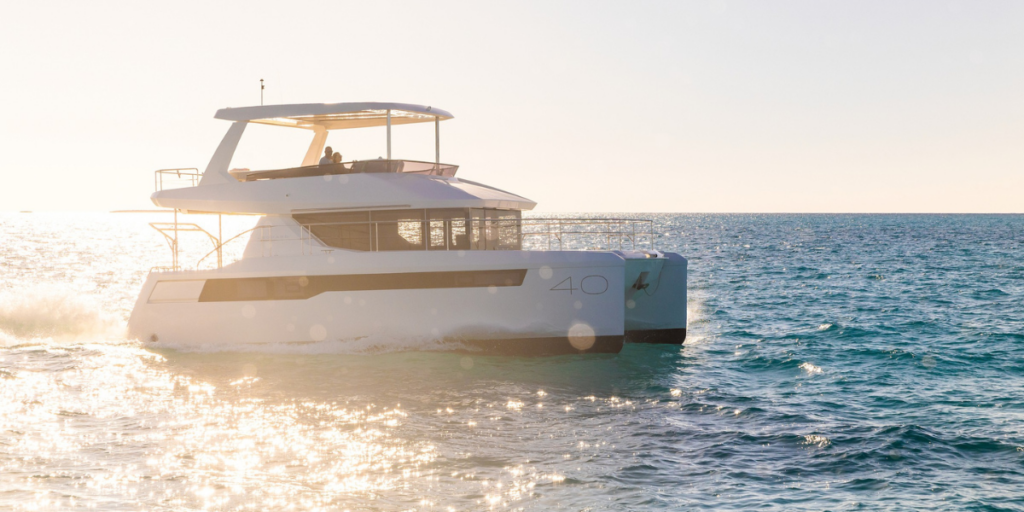
Why compare power catamarans and trawlers for the Great Loop?
The Great Loop isn’t a sprint. It’s a journey through rivers, canals, lakes, coastal passages, docks, locks, and downtime. Many buyers start by asking what the best boat for the Great Loop is, but the answer depends heavily on how you plan to live onboard. That means the “best” boat isn’t the one with the most impressive brochure specs. It’s the one that feels comfortable, manageable, and enjoyable after weeks or months onboard.
That’s why many couples planning the Loop now compare power catamarans and trawlers side by side. Both platforms work. Both are proven. But they deliver comfort and livability in different ways.
When comparing a power catamaran vs trawler for the Great Loop, most buyers are really deciding between two priorities: maximizing onboard livability versus keeping a more traditional cruising layout and footprint.
If you’re mapping out your route or just getting started, you can explore what the Great Loop looks like in real terms here: Read real Great Loop cruising stories.
Key Takeaways:
- Power catamarans typically offer more usable living space for the same length
- Trawlers prioritize traditional layouts and easier marina compatibility
- Shallow draft and twin-engine maneuverability make power cats appealing for many Loop routes
- The right choice depends on whether you value onboard comfort or simplified docking logistics
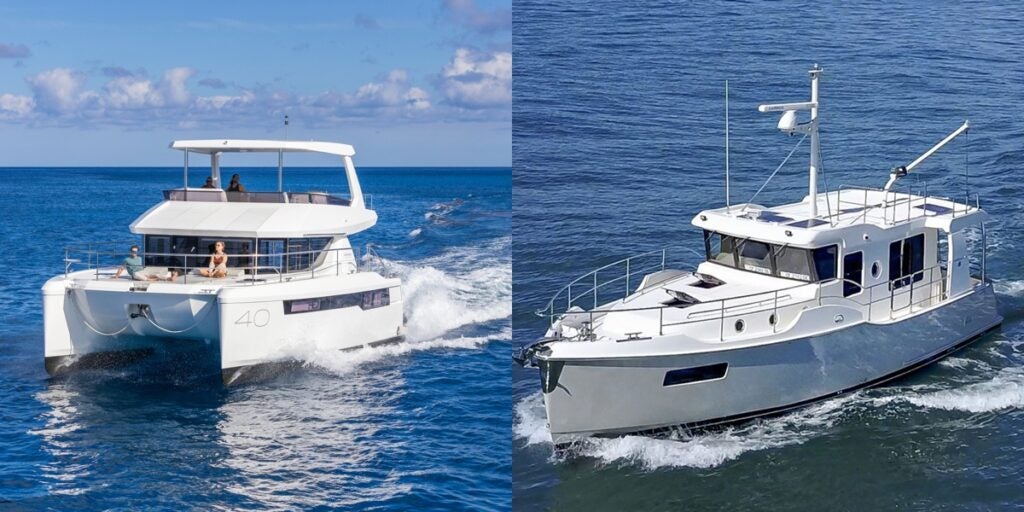
Power catamaran vs trawler: key differences at a glance
Here’s a side-by-side look at how power catamarans and trawlers compare across the areas that matter most for the Great Loop:
| Category | Power Catamaran | Trawler |
|---|---|---|
| Fuel Efficiency | More fuel-efficient across a wider speed range. Better efficiency at higher speeds because the narrow hulls produce less drag. | More efficient at very low speeds due to their displacement design. |
| Living Space per Foot | Wide beam creates an open salon, larger galley, and more usable living space for the same length. | Narrower layout, more segmented interior, typically relies on length for volume. |
| Comfort Underway | Stable platform at cruising speeds; reduced side-to-side motion in many everyday conditions. | Steady, traditional cruising feel designed for displacement-speed travel. |
| Draft (Shallow Water) | Often shallower draft for exploring and anchoring (varies by model). | Varies widely; some designs draw more water depending on keel/running gear. |
| Beam (Docking & Slips) | Wider beam may require more marina planning and slip availability. | Narrower beam is easier to accommodate in most marinas. |
| Handling & Maneuverability | Twin engines are standard; strong low-speed control and close-quarters maneuvering. | Predictable handling; single or twin engine depending on model. |
| Outdoor Living Space | Typically larger aft deck and more usable forward lounging space. | Often more limited outdoor space depending on layout and superstructure. |
| Best Fit For | Couples prioritizing comfort, space, and long-term living aboard without increasing length. | Buyers who prefer traditional cruising layouts and simpler marina logistics. |
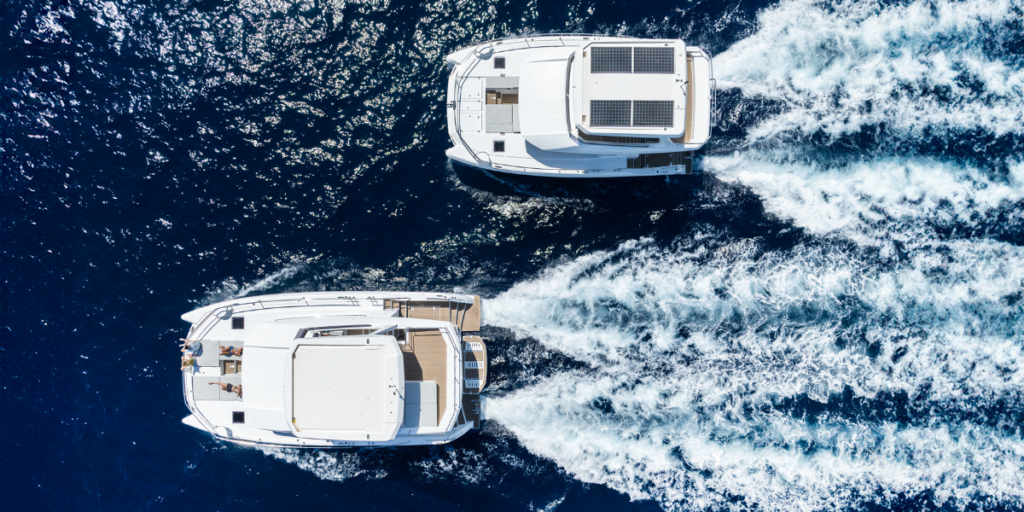
Power catamaran vs trawler: what’s the difference?
Power catamarans (PCs)
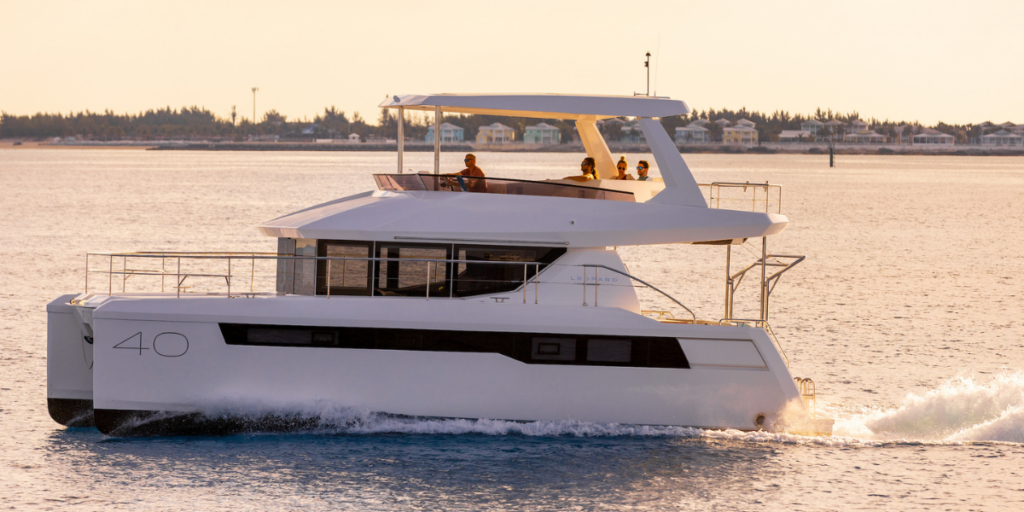
Power catamarans use two hulls connected by a bridgedeck, which allows more beam and more usable volume for a given length. At Great Loop cruising speeds, they’re often evaluated less on performance and more on space, stability, and daily comfort.
Trawlers
Trawlers are typically displacement or semi‑displacement monohulls designed for efficient, steady cruising. They’ve long been considered a default Loop choice because of their predictable handling, traditional layouts, and conservative cruising DNA.
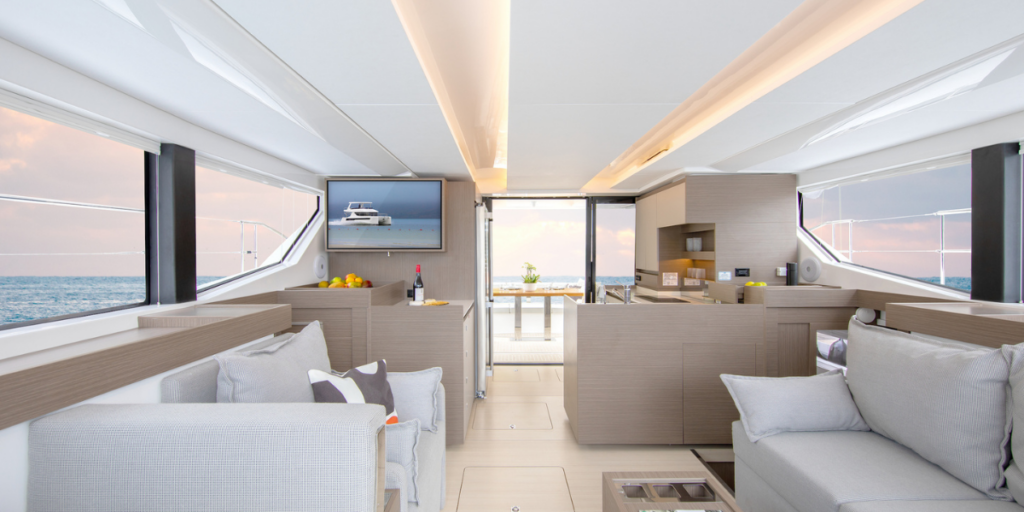
How living space compares on a power catamaran vs trawler
Power catamarans: more usable space per foot
The difference in usable space often becomes clear the moment you step aboard. While both platforms can support long-range cruising, they approach interior layout in very different ways. Wider beam translates into:
- Open salon and galley layouts
- Clear sightlines forward and aft
- Natural traffic flow for two people living aboard full‑time
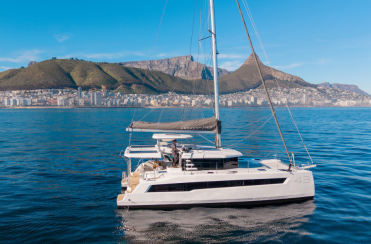
In powercats, this often means couples get the feeling of a much longer yacht without actually increasing overall length, docking complexity, or clearance concerns. You can see how this layout is configured in practice on the Leopard 40 Powercat.
Trawlers: narrower layouts and segmented living
Trawlers often use length rather than beam to achieve their cruising profile. They can feel solid and purposeful underway, but interior space is usually more segmented, with narrower passageways and defined zones.
Comfort underway: stability and fatigue over long distances
Power catamarans at typical Loop cruising speeds
At typical Great Loop cruising speeds, power catamarans often feel stable and predictable. The wide stance of twin hulls can help reduce side‑to‑side motion in everyday conditions.
Trawlers at displacement speeds
Trawlers are built for steady cruising and often feel planted and controlled underway.
At typical displacement speeds, both trawlers and many power catamarans can operate efficiently, but fuel economy varies significantly by hull design, load, and cruising habits. This is another factor best evaluated in real-world use rather than on paper alone.
Instead of focusing on specs, most experienced Loopers judge comfort by how they feel after several hours underway, and whether the boat remains easy and enjoyable to live on afterward.
Draft, beam, and real-world Great Loop constraints
Draft and shallow water access
Many power catamarans offer relatively shallow draft for their size, which can open up more flexibility in shallow sections and anchorages along the Loop. For a broader look at how draft and route constraints play out across the full journey, see our Great Loop Story Page.
Trawler draft varies by model, with some running shallow and others requiring more attention in low‑water areas. Ride characteristics vary significantly by hull design, so this is something best evaluated during a sea trial.
Beam and marina planning
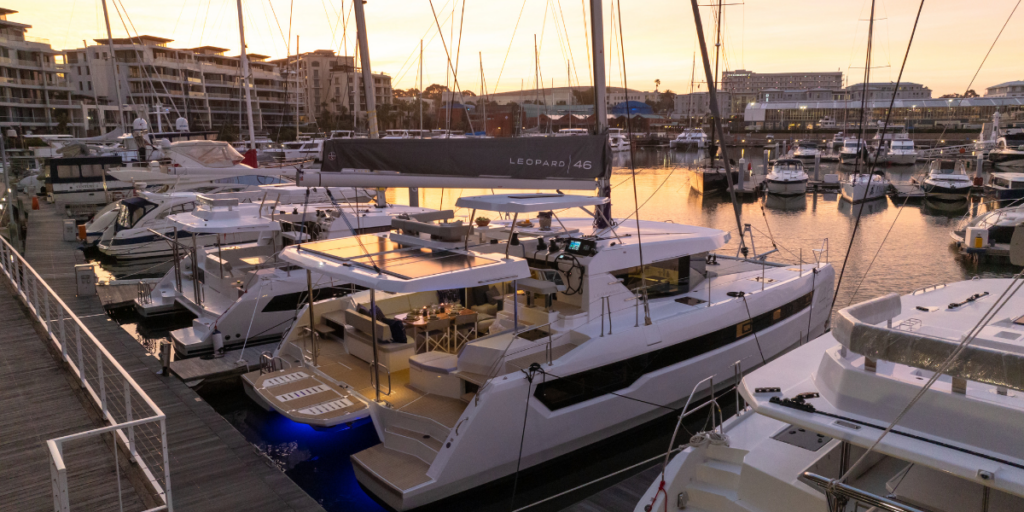
Beam is the main tradeoff with power catamarans. A wider footprint can require more marina planning or limit slip options in certain areas.
Trawlers, being narrower, typically offer more flexibility when it comes to docking logistics.
Handling and docking for couples
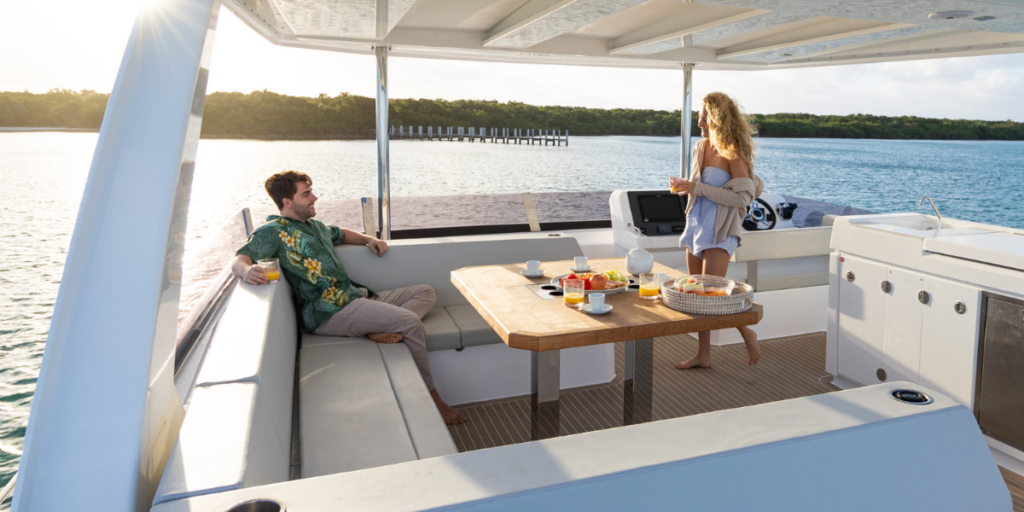
Power catamarans have twin engines, separated by the bridgedeck, to provide strong low‑speed maneuverability, and most power cats offer clear sightlines that help build confidence when docking.
Trawlers often feel predictable and controlled at slow speeds, especially for those familiar with monohull handling.
The better option is simply the one that feels easier to manage consistently.
Maintenance, access, and ownership reality
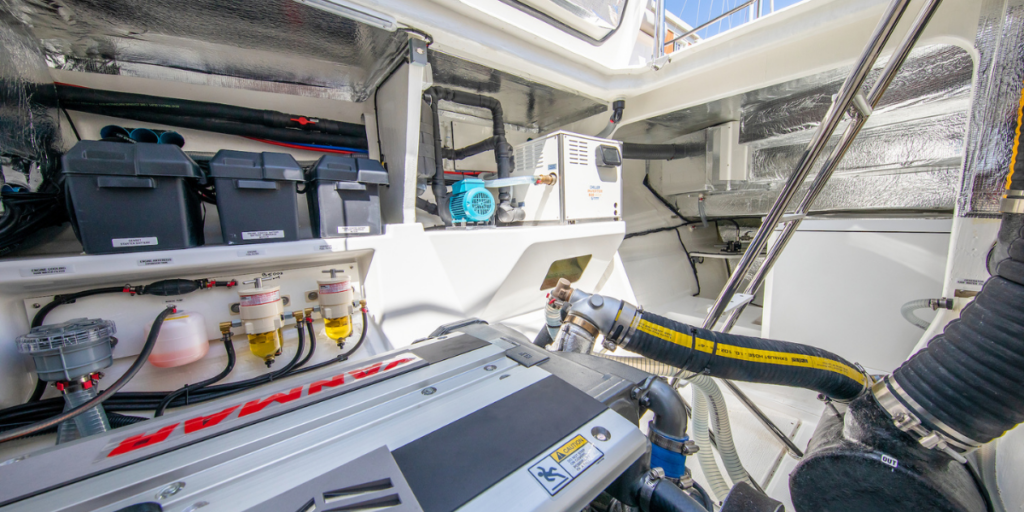
Well-designed power cats tend to prioritize service access, making routine checks and maintenance more manageable over long trips.
When it comes to trawlers, access is model-dependent. Some trawlers offer excellent access, while others may have tighter engine spaces. Layout and design matter more than category. That’s why it’s important to spend time at a boat show to get on board different boats and see which one is most suitable.
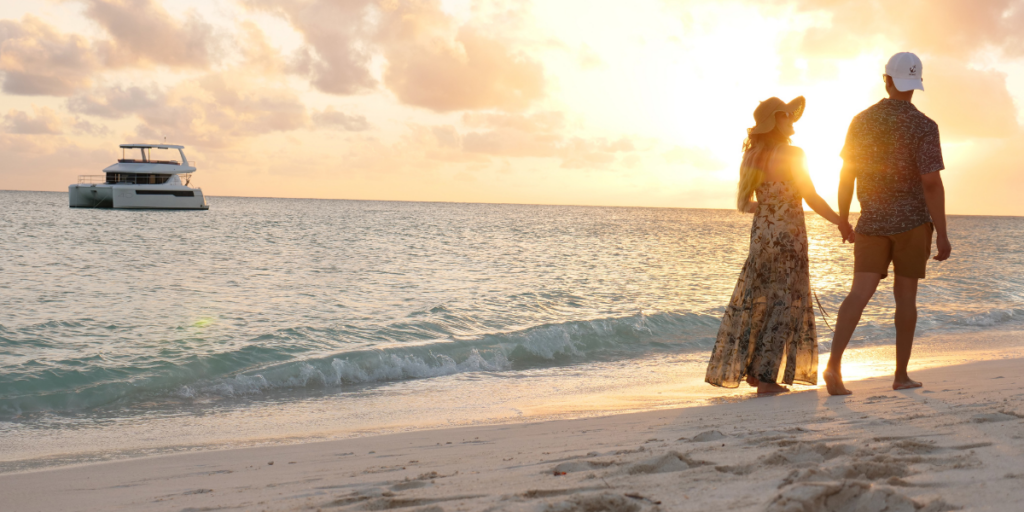
Which is better for the Great Loop?
Choose a powercat if:
- You want more living space without increasing length
- Panoramic visibility is important to you
- You plan to spend extended time onboard
- Shallow draft adds confidence for your route
- You’re comfortable planning around a wider beam
For example, models like the Leopard 40 PC are often considered by couples looking for a manageable size with true liveaboard capability for extended cruising like the Great Loop. Review the full specifications, layout, and onboard features of the Leopard 40 PC here.
Choose a trawler if:
- You prefer a traditional layout and cruising feel
- Marina flexibility is a top priority
- You favor a more segmented interior layout
- Displacement cruising is central to your plans
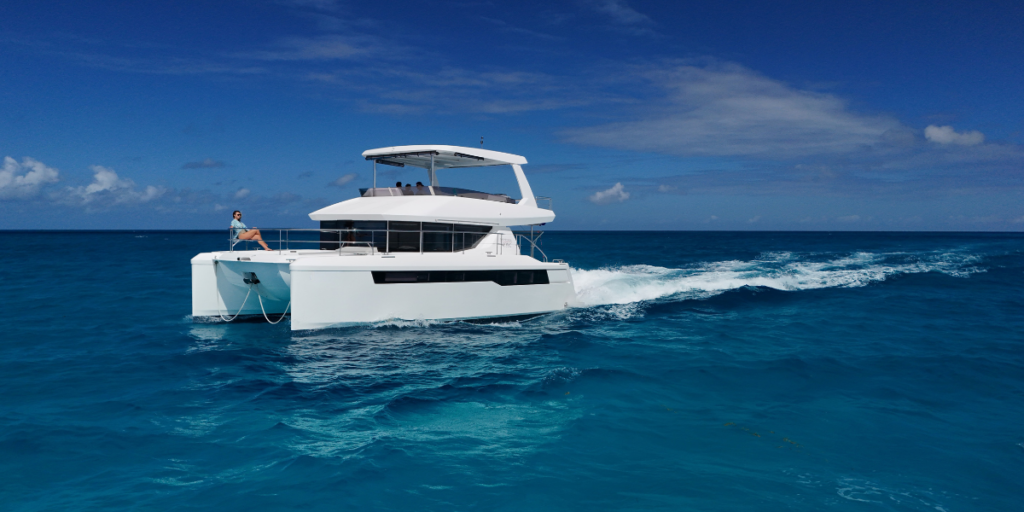
Final thoughts on choosing between a power catamaran and trawler
The best Great Loop boat is the one that matches how you actually plan to live onboard.
For some, that’s a trawler. For others, it’s a power catamaran that offers more space, simpler daily routines, and greater comfort without needing to move up in size.
If possible, step aboard both. Run them at realistic speeds. Picture your day‑to‑day life onboard. The right choice is the one that still feels right after weeks, not hours. For many buyers, the decision becomes clear not on paper, but after experiencing how each platform handles real‑world cruising days.
Frequently asked questions about power catamarans vs trawlers
Is a power catamaran better than a trawler for the Great Loop?
Both can be excellent options for the Great Loop. Power catamarans are often chosen for their space, stability, and liveaboard comfort, while trawlers appeal to those who prefer a traditional layout and easier marina compatibility.
Are trawlers easier to dock than power catamarans?
Trawlers are typically narrower, which can make marina access and slip availability easier in some locations. Power catamarans may require more planning due to beam, but they often provide strong maneuverability at low speeds thanks to twin engines.
What size boat is best for the Great Loop?
Many Great Loop cruisers choose boats in the 35–45 foot range, offering a balance of comfort, handling, and dockage flexibility. The right size ultimately depends on your cruising style, crew, and how you plan to use the boat day to day.
Can a power catamaran handle long-distance cruising like the Great Loop?
Yes, many modern power catamarans are well suited for extended cruising. Their layout, stability, and onboard space make them a strong option for couples planning to spend weeks or months living aboard during the journey.