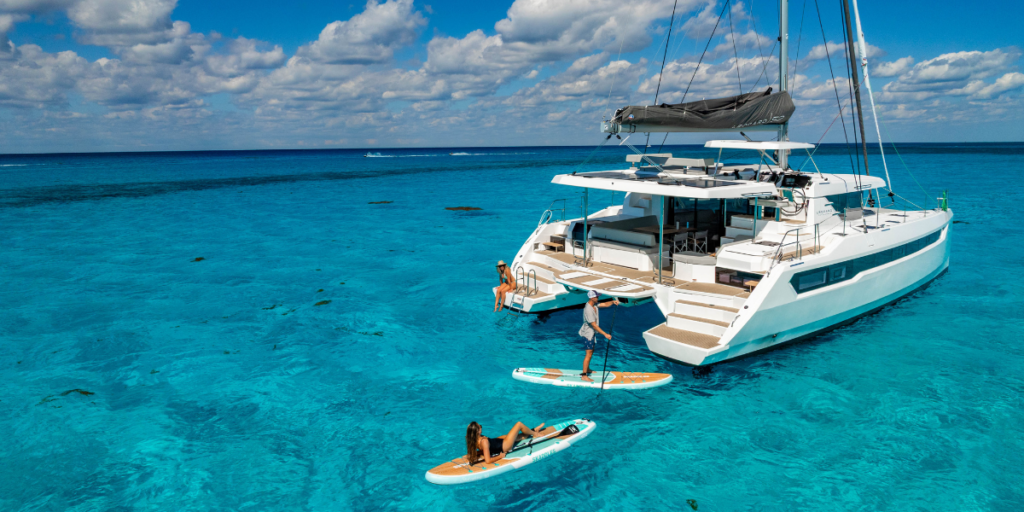
Whether you are planning on buying your first sailing catamaran or you are a veteran owner, when it comes to choosing your perfect catamaran, it’s less about choosing a boat and more about choosing the lifestyle it embodies.
Regardless of whether your ideal sailing lifestyle revolves around spontaneous weekend getaways, selling it all to escape into full-time cruising, or investing in the ultimate floating holiday home for large family gatherings, the right sailing catamaran should support how you actually plan to spend your time on the water.
And once it’s finally time to turn your dream into a reality, there is a literal boatload of questions, ‘what ifs” and the overwhelming question of ‘what should I consider before buying a sailing catamaran?’, that could quickly sink your dream.
In our comprehensive Leopard Catamaran buyer’s guide, we’ll walk you through all those “what ifs” and explore the questions you should be asking when buying a sailing catamaran. From the obvious to the often overlooked, this guide is designed to give you a clear, practical understanding of what truly matters when it comes to buying a sailing catamaran that perfectly matches your lifestyle and long-term plans on the water.
Already a Leopard owner or want to learn more about the experience? Discover our Leopard owner resources.
Start With Your Mission: Define Your Sailing Purpose Before You Compare
Before comparing layouts, specs, or brands, take a step back and define your mission. A catamaran designed for weekend cruising looks very different from one intended for full-time liveaboard life or extended offshore cruising.
The way you intend to use your sailing catamaran will shape every decision that follows. From cabin configurations and onboard systems to overall size and budget, selecting a sailing catamaran aligned with the way you want to live on the water helps you avoid unnecessary complexity and costly, underused features. Defining your priorities early on ensures you will be buying a sailing catamaran that genuinely supports and simplifies your time on the water.
And as you begin exploring different makes and models, browsing the Leopard sailing catamaran range provides a useful reference point for how thoughtful design, performance, and onboard livability come together to support a wide range of ownership goals and living experiences. For more in depth information about Leopard Catamarans and it’s heritage, learn more about the Leopard story.
Weekend Cruising vs Extended Liveaboard vs Offshore Passages: Pick the Style That Matches Your Adventure
If weekend cruising is your yacht ownership goal, then ease of handling and open social spaces should be your number one priority. You want a boat that’s intuitive, quick to set up, and enjoyable for short trips. Systems should be simple and low maintenance, whilst big storage spaces and large water and fuel capacity is less of a concern. The Leopard 43 is a prime example of a hassle-free weekend cruiser: compact, manageable, and ideal for couples or small families seeking stress-free, fun weekend adventures.
But if your plan is to live aboard for extended periods or take on long distance offshore passages, your priorities shift completely. Storage, privacy, and onboard systems that support long-term independence, like comfortable ventilation, self-sufficient energy, and reliable low-energy refrigeration become critical.
With models like the Leopard 46 and Leopard 52 perfectly designed for liveaboard and blue-water cruising, offering a large interior volume, flexible cabin arrangements, ample storage, easy access to critical systems, robust rigging and all of the onboard systems needed to spend weeks or months cruising in comfort.
Choosing the right sailing catamaran for your cruising needs ensures your yacht always feels like home, performs flawlessly, and is a confident and comfortable extension of how you choose to live on the water.
Crew Size vs Guest Use: Match Your Layout to Who’s Onboard
Once you have defined how you would like to spend your time on the water, start thinking about who will be onboard with you most of the time. Are you and your partner looking to sail off into the sunset for romantic weekend escapes? Are you planning fun filled family getaways with the kids? Are you moving on board as full time liveaboards, or looking to entertain as many friends and family as possible every holiday?
Narrowing down your crew and guest expectations and understanding who will be onboard and how often, will help give you a clear idea of what type of layout you should be looking at. As a well-matched layout ensures that your catamaran will feel comfortable and functional, regardless of the number of people onboard.
A very common misconception most prospective catamaran buyers have, is that more cabins mean more functionality. But having extra cabins handy for those “just in case” moments may sound appealing, they come with big tradeoffs in storage and owner privacy. If guests are occasional, flexibility, like the convertible saloon table on most Leopard models, often works better than permanent accommodations.
For example, a three-cabin layout, like on the Leopard 43, maximizes privacy and storage while still accommodating occasional guests. But for families or owners who frequently host friends, four- or five-cabin layouts, such as those on the Leopard 46 or 52, are more practical and provide more sleeping space without compromising comfort or social areas. And once you’ve defined your sailing goals and onboard needs, the next step is aligning them with the right Leopard model.
Which Leopard Catamaran Is Right for My Sailing Goals?
- The Best Catamaran for Weekend Cruising and Small Crews:
The new Leopard 43 is ideal for couples or small families looking for easy handling and stress-free sailing. Its compact size, intuitive systems, and three-or- four-cabin layout maximizes privacy and storage while still comfortably accommodating occasional guests
- The Best Catamaran for Liveaboard Living and Extended Cruising:
The Leopard 46 is designed for comfort over longer periods onboard. With a generous interior volume, flexible three- four- and five-cabin configurations, and robust onboard systems, this model provides the space, storage, and independence needed for extended cruising or full-time life aboard.
- The Best Catamaran for Bluewater Sailing and Large Groups:
For those planning longer passages or need more space for large gatherings, the Leopard 52 delivers the stability, load-carrying capability, and system redundancy required for safe and confident blue-water cruising, while still maintaining the comfort and livability Leopard Catamarans are known for.
Size, Layout, and Livability: Finding the Sweet Spot Between Space and Manageability
Bigger is not always better when it comes to buying a yacht. It is all about finding that sweet spot where comfort, space and manageability meet for your specific life out on the water. And keep in mind that the size of your sailing catamaran will influence everything from upfront costs, marina options, how your boat feels underway and how many crew you will realistically need to confidently handle your yacht.
Owner Version vs Multi-Cabin Layouts: Private Retreat or Flexible Space?
One of the biggest decisions when buying a sailing catamaran is choosing between an owner’s version layout and a multi-cabin configuration. This choice isn’t simply just about the number of cabins, it directly impacts how the boat feels, how you live onboard, and how well it supports your long-term plans.
An owner’s version typically dedicates an entire hull to a private suite, creating a true home on the water experience. On Leopard Catamarans, this often includes a spacious full-hull cabin, a larger ensuite bathroom, dedicated desk or lounge areas, and significantly increased storage. The result is a layout that feels open, comfortable, and ideal for couples or liveaboard owners who value privacy and extra storage.
In contrast, multi-cabin layouts maximize sleeping capacity and flexibility. By dividing both hulls into multiple cabins, these designs are perfect for owners who regularly host family, friends, or plan to enter the charter market in the future. While individual cabins may be slightly smaller and storage more distributed, the overall layout still creates a private yet highly social onboard experience.
But what truly sets Leopard Catamarans apart in this regard, is the ability to offer multiple layout configurations within the same model. All of the latest Leopard models are available in multiple cabin configurations, from full hull owner retreats to a 5-cabin layout ready for charter or large families and even layouts that prioritize a dedicated work area, giving you the boat you want, with the ideal cabin configuration for your specific needs.
Galley Location, Ventilation, and Daily Use: Designing Spaces You Actually Live In
The galley is one of the most-used spaces onboard any sailing catamaran, and on a Leopard, it’s where design truly starts to make a difference in everyday life.
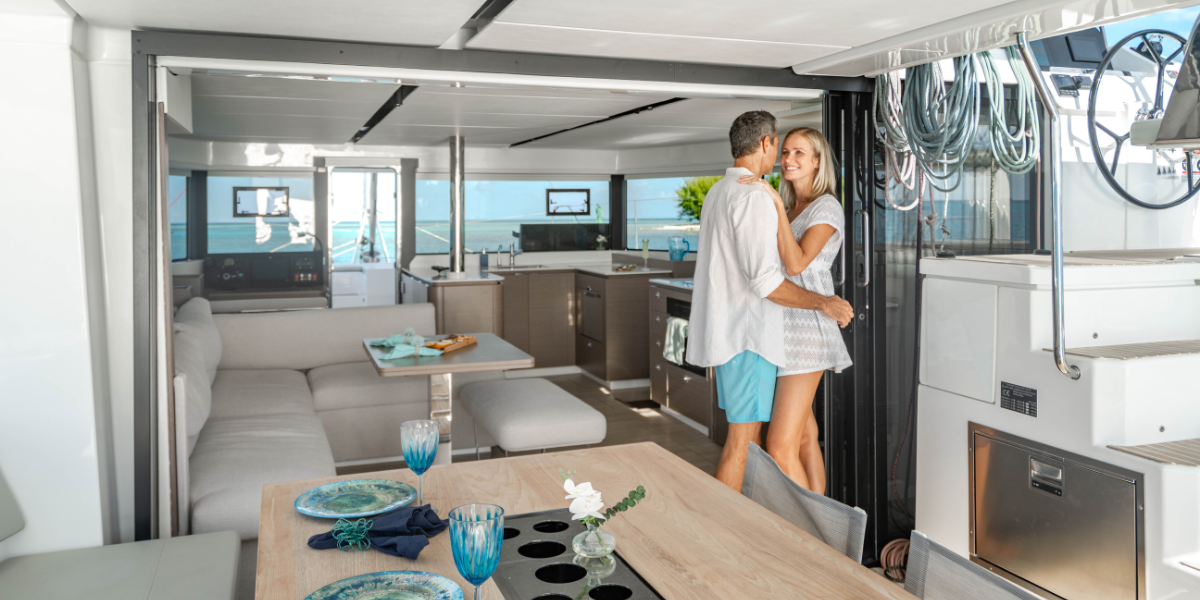
Rather than treating the galley as a tucked-away utility space, Leopard Catamarans are designed around a seamless indoor-outdoor living concept, where the galley, saloon, and aft cockpit function as one connected social hub. Large sliding doors open the entire space up, allowing whoever is cooking to remain part of the conversation, whether guests are inside or gathered around the cockpit table.
This layout becomes especially powerful when paired with one of Leopard’s most defining features: the forward door, connecting the saloon directly to the bow. While it may seem like a small detail at first glance, it fundamentally changes how the boat feels and functions day-to-day by creating a cooling front to back cross breeze, enhancing comfort and livability without relying solely on air conditioning.
Work From Boat Considerations: Creating a Floating Office That Works
With more and more owners working remotely, a sailing catamaran isn’t just a home anymore, it’s a floating office. And for those planning to fully integrate remote work and cruising, the goal isn’t just to “make it work”, it’s to create a setup that genuinely supports productivity.
Leopard’s evolving designs reflect this shift, offering layouts and features that make working from the water not only possible, but practical. On many catamarans, working remotely means adapting the saloon table or squeezing into a shared living area. Leopard takes a more intentional approach. Models like the Leopard 46 introduce a dedicated utility room that can be configured as a private onboard office, offering a quiet, separate space away from the main living areas, something that’s increasingly valuable for video calls, focused work, and maintaining a daily routine.
Beyond the layout, working remotely from a catamaran also introduces a new layer of technical considerations. It’s no longer just about sailing performance or looking good at the dock; reliable self-sufficient power is critical for a floating office.
Battery bank capacity, solar array size, inverter output, and generator support all play a direct role in keeping laptops, monitors, Starlink or Wi-Fi systems, and essential electronics running consistently. And energy efficiency also becomes key, as LED lighting, low-draw appliances, and smart energy management systems can help reduce reliance on generators and extend your time off-grid.
Choosing the right sailing catamaran for remote work means evaluating both space and power systems with equal importance. And Leopard’s latest designs go beyond simple layout flexibility, they offer genuinely modern energy solutions that support extended off‑grid living and connected work.
The Leopard 46, for example, is available with an optional Hybrid Electric Drive System, combining high-voltage lithium-ion batteries, solar arrays, and a range-extending generator into one power management system. It can recharge from solar, sailing regeneration, or shore power, supplying reliable energy for both propulsion and house loads while reducing generator use and enhancing autonomy and reliable sustainable power at anchor or underway. Combine this with the dedicated work space option of the Leopard 46 and you have the perfect floating office.
Which Leopard Catamaran Is Right for Me? Match Size, Layout, and Livability to Your Plans
- The Best Catamaran for Manageable Size, Owner’s Layout Flexibility, and Easy Cruising
A true entry point into sailing catamaran ownership, the Leopard 43 keeps handling simple while still offering owner’s version or multi-cabin layouts.
- The Best Catamaran for Liveaboard Layouts, and Work-From-Boat Capability
The Leopard 46 is the balance point between space and manageability, making it one of the most versatile liveaboard catamarans in the range. Multiple cabin configurations support both private owner use, guest flexibility and charter possibilities. Add in a dedicated utility room that can function as an onboard office, and it becomes a serious option for full-time cruising and remote work.
- The Best Catamaran for Maximum Interior Volume, Multi-Cabin Capacity, and Charter Potential
Built for owners who need space, capability, and long-term comfort, the Leopard 52 delivers high-volume living with extensive layout options, including large owner’s suites or multi-cabin setups for charter or families. The expanded galley and multiple living zones enhance onboard life, while the size allows for larger battery banks, solar arrays, and system redundancy, key for extended offshore passages and off-grid living.
Handling and Safety: Confidence at the Helm Equals Enjoyment at Sea
Confidence at the helm is one of the most important factors in truly enjoying a sailing catamaran. A well-designed boat should feel predictable, responsive, and manageable, even for a novice sailor or a couple cruising alone. Leopard Catamarans are specifically engineered to make handling intuitive while maintaining high safety standards, allowing you to focus on the adventure rather than wrestling with the boat.
Helm Visibility and Protection: See Clearly, Sail Safely
Confidence at the helm begins with visibility and protection. A thoughtfully designed helm station should provide clear sightlines in all directions, allowing for precise navigation and easy communication with your crew.
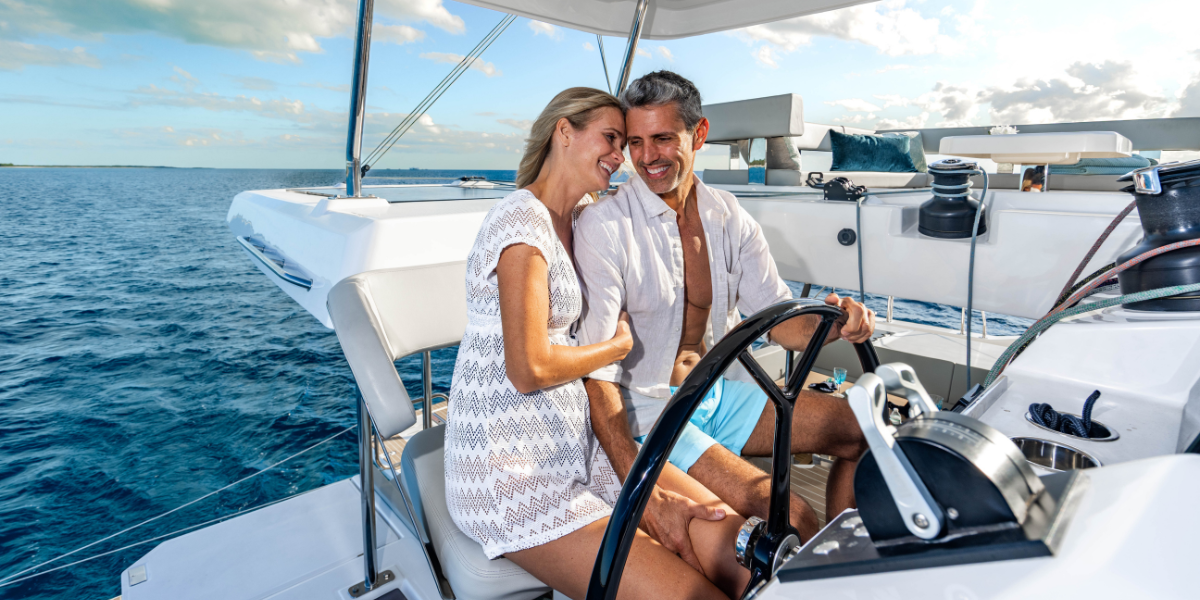
The Leopard helm design stands among the best in the industry, and intentionally positions all their helms high and forward to give unobstructed views of sails, lines, surrounding traffic, and docking approaches. All Leopard sailing catamaran models also features a protective hardtop with fold up rain covers, shielding the skipper from sun, rain, and spray while maintaining excellent visibility. Whilst ergonomically placed controls and instrument panels allow you to manage sails and navigation without leaving the helm, improving both safety and convenience.
This combination of visibility and shelter ensures that the helm is comfortable for long days at sea, tropical cruising, or extended liveaboard passages. The result is a station that feels intuitive, secure, and effortless, allowing you to focus on enjoying the journey, no matter your skill level.
Sail Handling Systems and Reefing: Effortless Control, Maximum Safety
Efficient sail management is key to both safety and enjoyment onboard any sailing yacht. And Leopard Catamarans are engineered to make raising, trimming, and reefing sails intuitive and efficient, even for short-handed crews.
Cockpit-led sheets, well-laid-out control lines, and electric winches reduce workload and fatigue while keeping you safe. The layout ensures quick adjustments during gusts, sudden squalls, or offshore passages without leaving the helm. Ergonomic access to all lines, halyards, and reefing systems minimizes unnecessary movement and maximizes predictability, giving sailors of all experience levels confidence at sea.
This simple ease of operation becomes particularly valuable in changing conditions, where quick adjustments can make a significant difference in both performance and safety. Whether you’re reducing sail in a sudden squall or adjusting for changing wind conditions, the goal is to handle your sails with minimal movement from the helm, reducing fatigue and enhancing safety.
Docking Confidence and Maneuverability: Take the Stress Out of Close Quarters
Few moments test a sailor’s confidence quite like docking and navigating in tight marinas. Leopard Catamarans are engineered to make close-quarter maneuvering intuitive, precise, and stress-free, even for less experienced sailors.
Twin engines provide a solid foundation for maneuverability, while elevated helm stations, clear stern sightlines, and strategically placed cleats and lines improve control. Owners consistently praise how intuitive and responsive Leopard Catamarans feel in busy Caribbean harbors or crowded European ports. With stable hull architecture, ergonomic helm design, and user-friendly systems, docking isn’t just about skill, it’s about confidence.
Which Leopard Catamaran Matches My Handling and Safety Needs?
- The Best Catamaran for Intuitive, Easy Handling:
The Leopard 43 is ideal for those seeking a catamaran that’s predictable, responsive, and easy to manage. With a compact helm, excellent sightlines, and efficient sail layouts, this model makes weekend cruising and short coastal trips effortless while maintaining safety in all conditions.
- The Best Catamaran for Confident Offshore or Tropical Cruising:
Designed for sailors ready to stretch their adventures, the Leopard 46 balances comfort and control on longer passages. Elevated helm stations and cockpit-led sail controls put everything within easy reach, while protective hardtops and electric winches reduce fatigue during extended days at sea.
- The Best Catamaran for Large Crews and Challenging Conditions:
The Leopard 52 offers advanced helm visibility, full weather protection, and optimized sail-handling systems. With twin engines, precise maneuvering, and cockpit-led controls, it’s engineered for confidence in tight harbors and offshore passages.
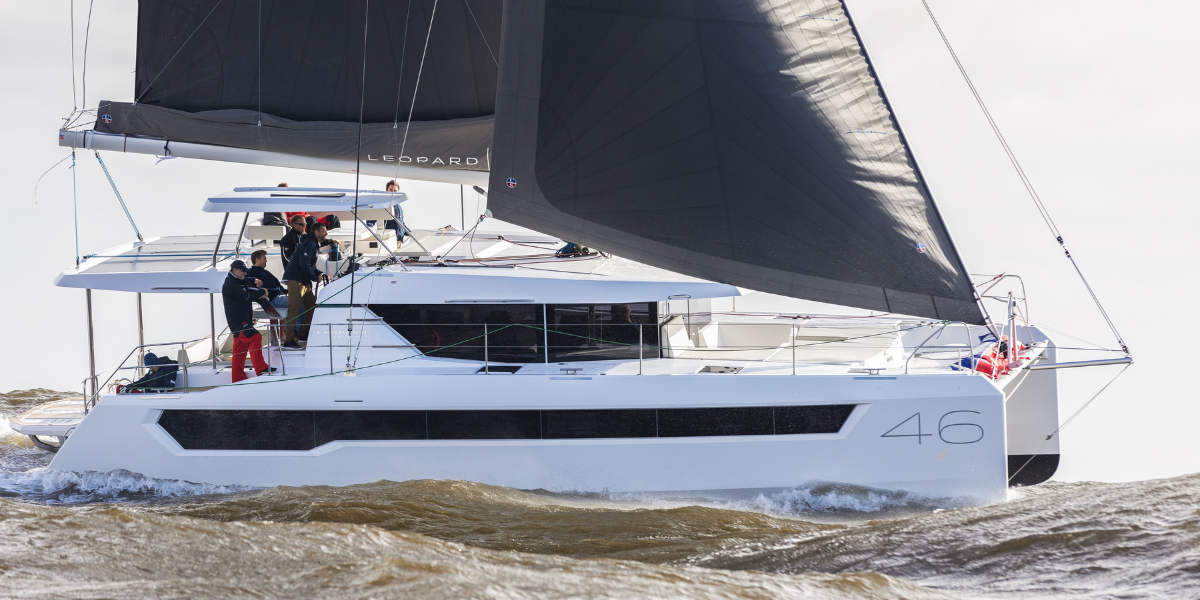
Offshore Comfort and Readiness: Performance Meets Livability at Sea
Comfort offshore isn’t just about luxury, it’s about how your catamaran behaves at sea, handles changing conditions, and supports life aboard during longer passages. A well-designed boat keeps the crew happy and systems manageable, even when the wind picks up or seas get choppy.
Payload Discipline: Every Pound Counts
One of the most overlooked factors to consider when buying a sailing catamaran for long distance offshore cruising and performance, is payload. Understanding how much you plan to carry, from provisions to personal gear, is essential when selecting the right model, as every catamaran is engineered to operate within a specific weight range, and exceeding that can impact speed, handling, and fuel efficiency.
A boat that handles beautifully when lightly loaded may feel sluggish, less responsive, and harder to manage if overloaded. For this reason, understanding your intended load and daily usage is essential when choosing a catamaran.
Leopard Catamarans are designed with efficient load distribution and weight-conscious engineering. Hulls, bulkheads, and storage compartments are positioned to maintain balance and optimize sailing performance, even when fully provisioned for extended trips. By keeping payload within the recommended range, you ensure that your catamaran retains its speed, maneuverability, and fuel efficiency in varying sea conditions.
Motion at Sea: Smooth, Predictable, and Fatigue-Free
While catamarans are known for their stability, motion can vary with different hull designs, weight distribution, and sea conditions. A well-balanced catamaran should minimize pitching and rolling in chop and rough seas, helping to reduce fatigue and enhancing comfort on long passages.
And Leopard Catamarans are designed to do just that. Engineered for smooth, predictable motion, even in challenging offshore conditions, the thoughtful hull shaping, reinforced structures, and optimized weight distribution minimize pitching and rolling, keeping the crew comfortable and alert. This stable ride enhances sleep quality, improves efficiency onboard, and ensures safety, allowing you to enjoy longer passages, handle daily tasks with ease, and stay focused on navigation and decision-making.
Redundancy and Service Access: Reliability at Sea
If you are considering buying a sailing catamaran for extended cruising, then the reliability of onboard systems are just as critical as the sailing performance itself. Leopard Catamarans are engineered with built-in redundancy and thoughtful system placements to maximize offshore confidence. Dual systems for power, water, and navigation ensure that essential functions continue uninterrupted, even if a primary system fails.
On any extended voyage, access to critical systems and built-in redundancy can make the difference between a smooth passage and a stressful situation. Leopard Catamarans are thoughtfully designed to ensure that engines, electrical panels, plumbing, and other essential systems are easy to reach and maintain, even while at sea. Allowing routine maintenance and troubleshooting to be completed safely and efficiently without disrupting daily life onboard.
This practical, maintenance-friendly design not only reduces stress during long passages but also enhances safety and comfort, giving owners the peace of mind to focus on sailing rather than systems management.
Which Leopard Catamaran Offers the Best Offshore Comfort, Safety, and Bluewater Readiness For My Needs?
- The Leopard 43 Catamaran: Best for Coastal Comfort and Weekend Cruising
The Leopard 43 delivers a smooth, stable ride for weekend cruising or short coastal trips. Its compact, weight-conscious design ensures manageable motion at sea, and onboard systems are easily accessible for quick maintenance, making shorter offshore passages both safe and enjoyable.
- The Leopard 46 Catamaran: Ideal for Extended Cruising and Liveaboard Comfort
The Leopard 46 combines a thoughtful hull design with optimized weight distribution for comfortable offshore motion. Redundant systems, easily reachable service panels, and simplified maintenance make life aboard efficient and stress-free during extended trips.
- The Leopard 52 Catamaran: Bluewater Ready and Offshore Performance Optimized
The Leopard 52 maximizes comfort with advanced hull forms, balanced weight distribution, and minimal motion. Redundant power, water, and navigation systems, along with logically placed service access, provide unmatched reliability and peace of mind for remote cruising.
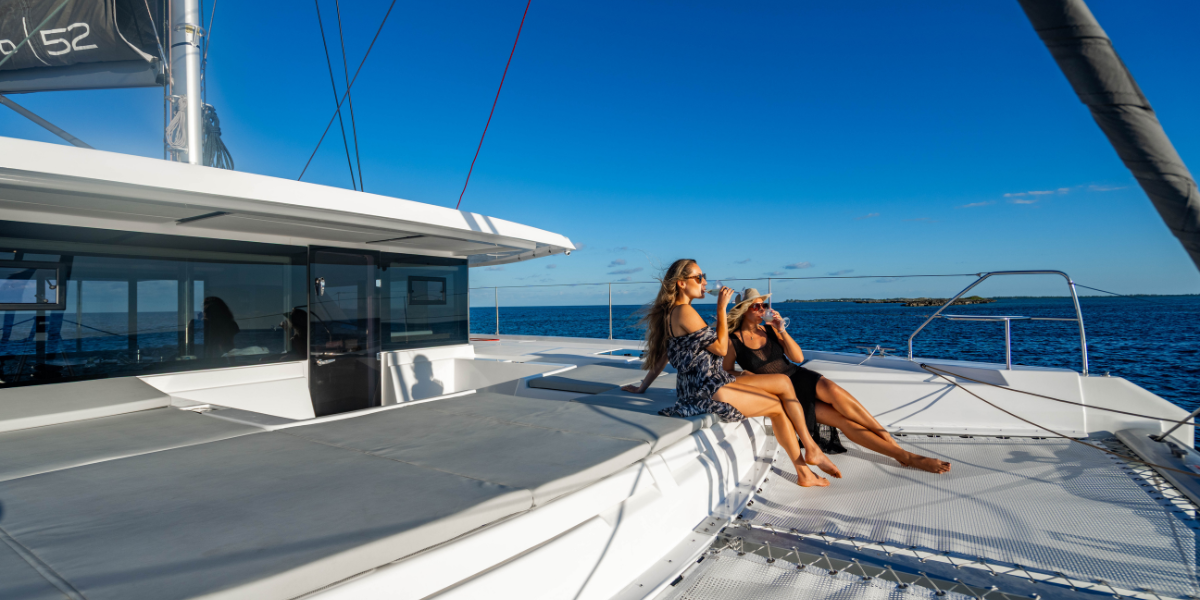
Energy and Water Independence: True Off-Grid Freedom
True freedom on a sailing catamaran comes from self-sufficiency and the ability to anchor in remote bays without relying on marinas. And for most prospective yacht owners, energy and water autonomy are non-negotiable must-haves that enable stress-free cruising in remote locations.
No other boat builder embodies this concept more than Leopard Catamarans. Designing all of their yachts to maximize energy and water independence with integrated solar panels, lithium battery banks, water makers, and optimized generator systems, all working together to minimize stress and maximize off grid living.
Solar, Batteries, and Generator Strategy: Achieving True Off-Grid Freedom
For Leopard Catamaran owners, energy self-sufficiency at sea is a cornerstone of stress-free cruising. High-efficiency solar panels capture renewable energy to meet everyday power needs, while lithium battery banks store ample energy for extended stays at anchor, keeping refrigeration, lighting, navigation systems, and air conditioning fully operational.
And when energy demands exceed solar capacity, backup generators provide reliable power for high-demand situations, giving owners confidence during long offshore passages. Leopard’s designs optimize deck layouts for maximum solar exposure, integrate smart battery management systems, and feature energy-efficient appliances to reduce generator reliance, ensuring quieter, greener, and more sustainable cruising.
These integrated energy solutions allow owners to enjoy true off-grid sailing, providing comfort, reliability, and peace of mind while exploring remote anchorages or cruising for multiple days without marina support.
Water Storage and Watermakers: Extend Your Cruising Range
When you’re planning for stress free self-sufficient cruising, your freshwater supply can make or break the experience. And it’s not just about having big water tanks, it’s about how efficiently water can be produced, accessed, and managed while offshore.
Leopard Catamarans are designed with water autonomy in mind, combining generously sized storage tanks with high efficiency watermakers that turn seawater into freshwater at the push of a button. These systems are also engineered with simplicity and reliability in mind, with smart placement for easy monitoring and maintenance, so you can spend less time managing systems and more time enjoying life at sea.
With these reliable, easy-to-use water systems, you can confidently tackle extended offshore cruising, liveaboard life, or remote anchoring without ever worrying about running dry. Whether it’s cooking, cleaning or long hot showers, Leopard sailing catamaran owners can rely on consistent freshwater availability.
Which Sailing Leopard Catamaran Model Supports My Off-Grid Lifestyle?
- The Best Self-Sufficient Catamaran for Weekend Cruising and Short Off-Grid Stays: The Leopard 43 is compact yet capable, with efficient solar panels, lithium battery banks, optional generator support, and smartly sized water tanks with an easy-to-use watermaker.
- The Best Liveaboard Catamaran for Extended Off-Grid Cruising and Energy Independence: The Leopard 46 offers advanced energy management, high-capacity batteries, solar integration, and reliable water systems that supports longer passages and off-grid adventures with dependable power and freshwater autonomy.
- The Best Bluewater Catamaran for Full Off-Grid Autonomy and Long-Range Offshore Sailing: Offshore-ready and fully autonomous, the Leopard 52 features extensive solar arrays, large-volume lithium batteries, integrated generator backup, and redundant watermaker systems, providing maximum energy and water independence for long-term sailing.
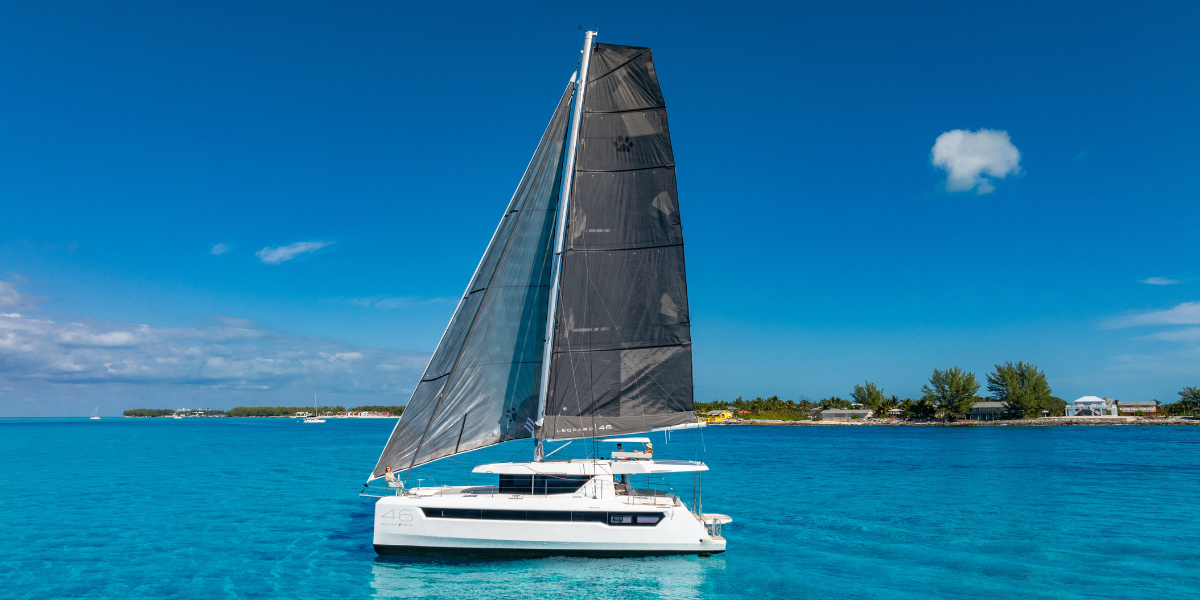
Budget Beyond The Purchase Price: Planning For Long-Term Catamaran Ownership
Owning a sailing catamaran goes far beyond the initial purchase price. And planning for yacht ownership means carefully considering all the ongoing costs that are going to shape your long-term experience on the water. Which makes careful financial planning crucial to ensuring that your sailing adventures remain stress-free and sustainable.
Insurance, Maintenance and Marina Constraints: The Real Cost of Ownership Beyond the Purchase Price
Ongoing costs like insurance, maintenance, and dockage are not fixed, they scale based on your boat’s size, value, cruising plans, and your level of experience. And understanding what drives these costs is key to avoiding surprises later.
Insurance premiums, for example, are influenced by factors like vessel value, cruising region (hurricane zones vs. non-hurricane zones), owner experience, and whether you plan to charter the boat or use it privately. Larger, more complex catamarans typically carry higher premiums, and some insurers may require additional certifications or impose cruising restrictions depending on your sailing background.
Maintenance is another major consideration, and it’s not just about routine servicing. Annual haul-outs, antifouling, sail and rigging inspections, engine servicing, and ongoing system upkeep, like plumbing, electrical and refrigeration all add up. A common rule of thumb is to budget around 10% of the boat’s value per year for maintenance and upkeep, though this can vary depending on how heavily the boat is used and how hands-on you are as an owner.
Marina costs and availability can also have a significant impact on your cruising flexibility. Catamarans, with their wider beam, often require larger, and more expensive, berths, and in high-demand cruising grounds like the Mediterranean or Caribbean, space can be limited during peak season. And in some cases, this may influence not just your costs, but where and how you plan your cruising itinerary.
Taking the time to understand these ongoing expenses upfront allows you to plan realistically and choose a catamaran that aligns not just with your lifestyle, but with your long-term financial comfort. Because true ownership isn’t just about getting on the water, it’s about staying there, confidently and sustainably.
New vs Brokerage Catamaran Considerations: Cost, Timing, and Long-Term Value
Deciding between a new build and a pre-owned Leopard Catamaran is one of the most important financial and lifestyle decisions you’ll make as an owner. While both options get you on the water, they differ significantly in terms of upfront cost, depreciation, timeline, and ongoing ownership experience.
A new build sailing catamaran offers the latest design features, modern systems, and full manufacturer warranties, along with the ability to customize your layout, finishes, and equipment to match your exact cruising plans. You’re essentially starting with a clean slate, which means fewer immediate maintenance concerns and a more predictable ownership experience in the early years. However, that comes at a premium price point, and like any new asset, a new yacht will experience its steepest depreciation within the first few years of ownership.
Brokerage catamarans, by contrast, often represent strong value. The initial depreciation has already occurred, meaning you can typically step into a larger model or higher specification for the same budget. They also offer immediate availability, which can be a major advantage if you’re looking to cruise right away rather than wait for a build slot. That said, older systems, sails, or equipment may require upgrades or replacement, and a thorough survey is essential to understand the true cost of ownership beyond the purchase price.
The decision between a new and a brokerage catamaran ultimately comes down to how you balance budget, timing, and tolerance for refits or upgrades. As a new build prioritizes customization and simplicity, while a pre- owned yacht prioritizes value and faster access to the water.
Whichever route you choose, the smartest buyers look beyond the purchase price. Insurance, maintenance, refits, and marina costs can vary significantly between a new and pre-owned catamaran, and factoring this into your decision early on ensures your ownership experience stays smooth, predictable, and aligned with your long-term cruising plans.
Which Leopard Catamaran Fits My Budget?
- The Best Entry-Level Catamaran for Affordable Ownership and Lower Ongoing Costs:
The Leopard 43 offers the most accessible path into catamaran ownership, with lower insurance premiums, more affordable marina options, and simpler maintenance requirements. The brand new 43 is available as a fully customized new build or consider the Leopard 42 as a brokerage yacht for quicker access at a lower upfront cost.
- The Best Mid-Range Catamaran for Balanced Ownership Costs, Comfort, and Liveaboard Capability:
The Leopard 46 strikes a strong balance between livability and long-term cost control. Insurance, dockage, and servicing remain moderate for its size. Buyers can choose between a turnkey new build with modern upgrades, or a pre-owned Leopard 45 brokerage model that offers immediate availability and a lower price point.
- The Best Premium Catamaran for Bluewater Cruising, Offshore Capability, and Long-Term Value:
As a larger, more complex offshore catamaran, the Leopard 52 comes with higher insurance, dockage, and maintenance costs. In return, it delivers maximum space, system redundancy, and bluewater capability for serious long-distance cruising.
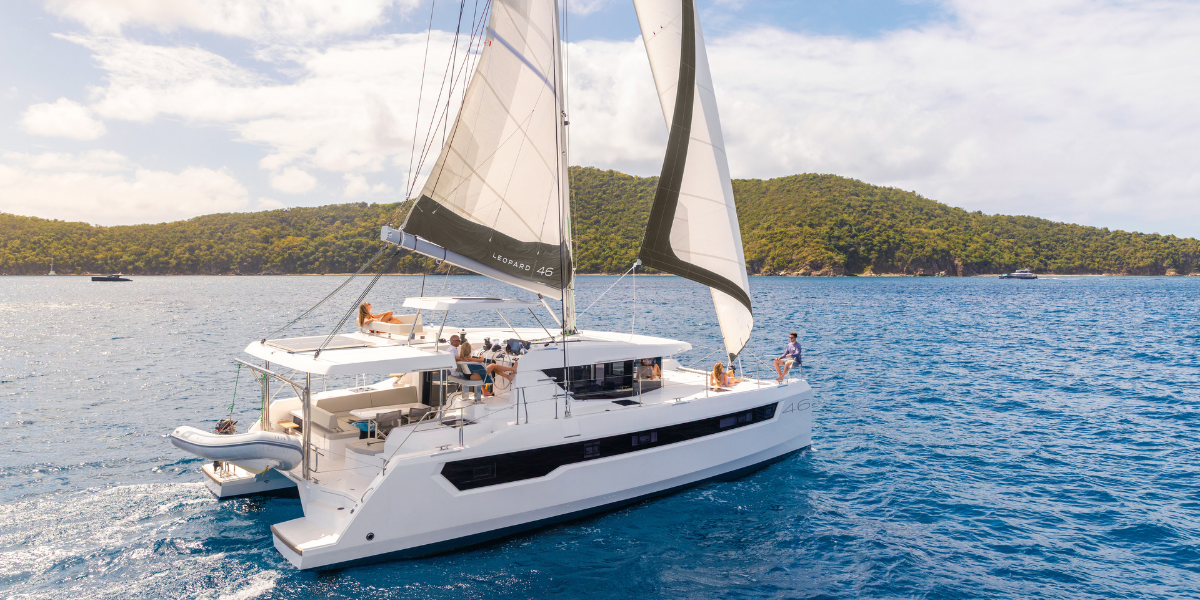
What To Evaluate During A Sea Trial: Experiencing Your Leopard Catamaran In Action
A sea trial is where your sailing catamaran moves beyond the specs and brochures and proves itself in real conditions. It’s your opportunity to evaluate how the boat actually feels, handles, and functions when it matters.
During your sea trial pay close attention to performance under power and sail, but also to the details that define everyday life onboard, like visibility from the helm, ease of maneuvering, noise levels, ventilation, and how the living spaces function underway and at anchor. A proper sea trial isn’t just about how the boat sails, it’s about confirming that it truly fits the way you plan to live, cruise, and use it on the water.
Under Power: Maneuvering, Control, and Real-World Handling
Evaluating a Leopard Catamaran under power is less about top speed and more about control, predictability, and confidence in tight situations. This is where you’ll feel how the boat truly handles in marinas, anchorages, and everyday maneuvering scenarios.
Focus first on throttle response and low-speed control. Twin engines should give you precise maneuverability, allowing you to pivot the boat, hold position, and dock with minimal stress. Test how the boat responds when shifting between forward and reverse, and how easily you can control it in crosswinds or currents, as this is where good handling really shows.
Visibility from the helm is just as critical. Clear sightlines to the stern corners and along both hulls make a noticeable difference when docking or navigating tight spaces. At the same time, evaluate helm ergonomics. How is the throttle placement, steering responsiveness, and how intuitive everything feels when you’re actively maneuvering.
Also pay attention to engine noise, vibration, and overall smoothness. Excessive vibration or poor sound insulation becomes very noticeable during longer motoring periods and can impact comfort onboard.
A well-designed catamaran should feel controlled and predictable at low speeds, not just capable at higher ones. Because in real-world cruising, it’s not about how fast you go, it’s how confidently you can handle the boat when it matters most.
Under Sail: Handling, Balance, and Comfort
Your sea trial under sail is where a Leopard sailing catamaran’s true character comes alive. Focus on how smoothly the sails hoist, trim, and reef, as effortless sail handling is a hallmark of a well-engineered cruising catamaran. Pay attention to how quickly the boat responds to wind shifts and sail adjustments, as a responsive catamaran should allow for confident, relaxed sailing whether close-hauled or on a broad reach.
Balance and stability are just as important. Observe how the catamaran heels, tracks, and carries speed in varying conditions. Minimal pitching and gentle motion make for more comfortable days onboard and reduce fatigue during longer passages.
Testing the ergonomics of the helm under sail is crucial when buying a sailing catamaran. Make sure to reach for all the winches, hoist all the sails and take note of how easily you can move around the cockpit while handling sails. A thoughtfully laid-out helm station and intuitive controls, like those found on all Leopard Catamarans, make sailing safer, faster, and more enjoyable, especially when handling lines solo or with a small crew.
By focusing on sail responsiveness, stability, and onboard comfort, you’ll gain a clear understanding of the Leopard Catamaran’s sailing character. Whether you’re planning coastal day sails or extended offshore adventures, these insights help determine if the yacht aligns perfectly with your cruising style and lifestyle.
At Anchor and Dock: Livability and Daily Comfort
Evaluating a Leopard Catamaran while stationary is just as important as a sea trial. Spend time onboard at anchor or on the dock to experience the vessel’s true livability and long-term comfort.
Observe how the boat feels at rest in both calm and slightly choppy conditions, as stability plays a significant role in sleep quality, meal preparation, and overall onboard comfort. Also take note of how ventilation, airflow, and natural light create a pleasant onboard environment or not, and whether the cabins and saloon remain comfortable throughout the day. On Leopard Catamarans, features like the forward cockpit door make a noticeable difference by creating a refreshing cross breeze throughout the main salon and cockpit, enhancing comfort throughout the boat in warm climates.
Move through the boat as you would during a typical day. How easy is it to move between cabins or reach storage? Are the heads practical and accessible for your family or guests? Can meals be prepared efficiently in the galley? Does the layout support both privacy and social interactions? These everyday seemingly small details often have a greater impact on your onboard experience than any technical specifications ever will.
Taking the time to assess livability during your sea trial helps ensure that your prospective catamaran actually supports your intended lifestyle. Whether you are planning weekend escapes or extended cruising, understanding how the boat performs as a home on the water is just as important as how it sails.
What Should I Look for During a Leopard Catamaran Sea Trial?
- The Best Sailing Catamaran for Easy Handling and Stress-Free Docking:
Ideal for those who want nimble performance with comfortable living spaces, the Leopard 43 stands out for its easy handling and stress-free docking. On a sea trial focus on low-speed handling under power, docking responsiveness, and how smoothly sails hoist, trim, and reef.
- The Best Catamaran for Balanced Sail Performance, Helm Control, and Liveaboard Comfort:
The mid-range Leopard 46 offers the best of both worlds when it comes to easy maneuvering and liveaboard comfort. Evaluate engine response in slow maneuvers, helm ergonomics, and sail balance in varying winds. At anchor, test cabin accessibility, heads, galley function, and overall comfort for extended cruising. Perfect for owners seeking a versatile catamaran that blends sailing performance with livable spaces.
- The Best Offshore Catamaran for Bluewater Handling and Stability:
The spacious and stable Leopard 52 offers a true luxurious floating home experience. Focus your sea trial on full offshore handling, engine power, and control in both tight and open waters. Under sail, assess trim, balance, and stability across wind conditions. At anchor, note space, ventilation, and comfort for numerous guests.
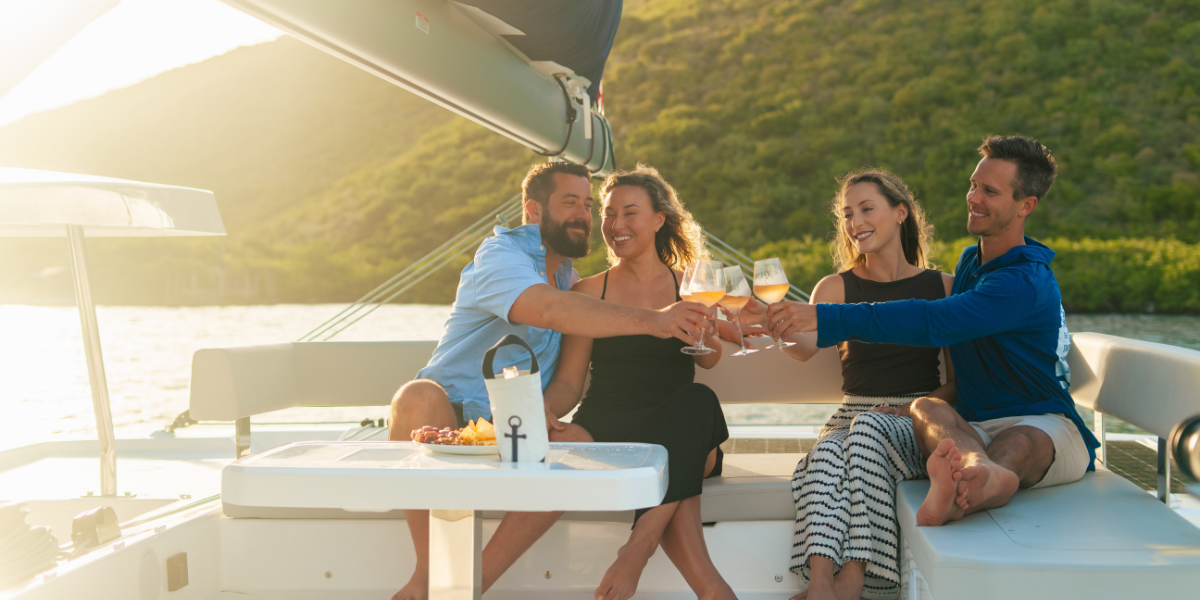
How to Shortlist Confidently: Finding the Sailing Catamaran That Fits Your Lifestyle
By the time you reach the shortlisting stage, you should have a clear understanding of your priorities, your cruising mission, comfort preferences, and operating style, but how do you turn all that information into a confident shortlist?
Once your priorities are clear, and your shortlist begins to take shape, engaging with a knowledgeable Leopard specialist can bring clarity and confidence to your decision-making process. Experts can translate your lifestyle goals into practical guidance, helping you identify the models and options that will maximize enjoyment, efficiency, and long-term value. You can connect directly with a specialist here.
And besides just expert advice, it is also important to learn from real owner experiences to add another layer of insight into your decision making process. Reading through owner stories and insights on the Leopard Catamarans Blog provides a real-world perspective on how these boats perform in various conditions, and what full time liveaboard life is really like. These insights can illuminate valuable nuances that specifications alone can’t capture.
Looking for more Leopard buying tips? As you refine your shortlist, it also helps to explore the full Leopard sailing catamaran range and understand the design philosophy behind each vessel. Comparing models side by side makes it easy to see which layouts, systems, and configurations will best support your cruising ambitions. And certain features will start to feel essential, while others may be less critical depending on whether you plan coastal trips, liveaboard adventures, or offshore cruising.
Ultimately, choosing a Leopard sailing catamaran is about more than just selecting a boat for sale, it’s about finding a yacht that complements your lifestyle, fulfills your ambitions, and enables you to explore the world on your terms. Start your journey today and discover which Leopard model will make your sailing dreams a reality.