Fuel prices fluctuate. What most buyers really want to know is simple: what does fuel look like as an owner, day to day and trip to trip? Not in theory, but in real routes you’d actually run, like Fort Lauderdale to Key West or Miami to Nassau.
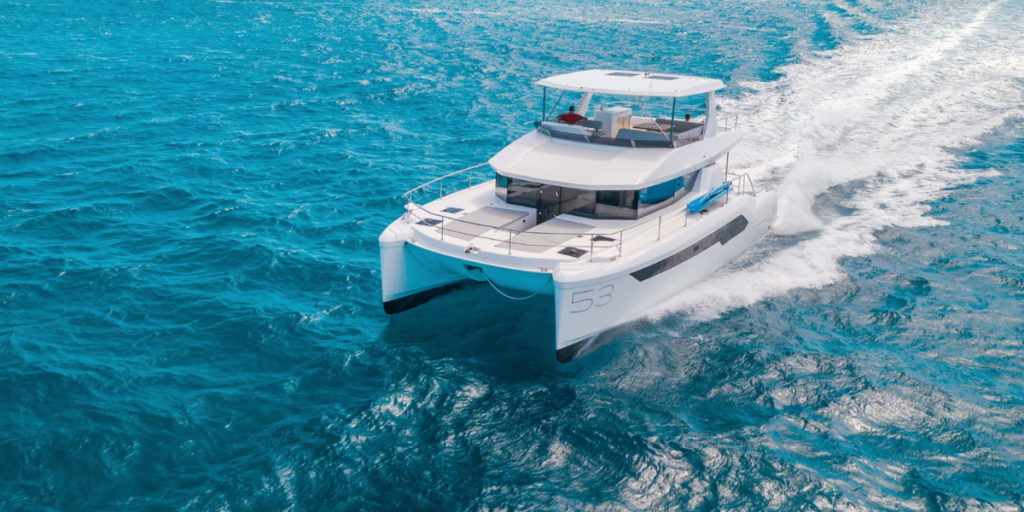
That’s where the Leopard 53 Powercat, a long-range cruising power catamaran, stands out. It’s not about chasing one perfect number. It’s about having options: the flexibility to cruise without building your itinerary around fuel stops, and the confidence to adjust speed when conditions or plans change.
If you want the short version: efficiency isn’t a nice‑to‑have. It’s what turns range into freedom. For buyers comparing motor yachts and power catamarans, the Leopard 53 PC’s fuel efficiency translates directly into longer range, more flexibility, and less trip planning around fuel.
Why Range Matters Once You’re Actually Cruising
Range matters most when it changes your decisions. It can mean fewer moments where you have to fuel, more time enjoying the places you actually came to see, and more margin when weather shifts or a day runs longer than expected.
Owners don’t typically plan a trip around maximum speed. They plan around comfort, sea state, and the kind of day they want to have. That’s exactly why understanding the consumption curve matters. It shows how the boat behaves across different cruising styles, not just at one number.
The Performance Curves (A Simple Way to Use Them)
The Leopard 53 PC performance curves show how fuel consumption changes with speed and load conditions, allowing owners to think about the boat in practical terms.
A simple way to use them:
- Decide what kind of day you’re planning (a fast hop versus a longer, more efficient run).
- Choose a realistic cruising speed or RPM range.
- Plan with a margin for sea state and conditions.
This is what makes the curves useful, not as a technical document, but as a decision‑making tool.
Real‑World Trip Examples (Florida + Bahamas)
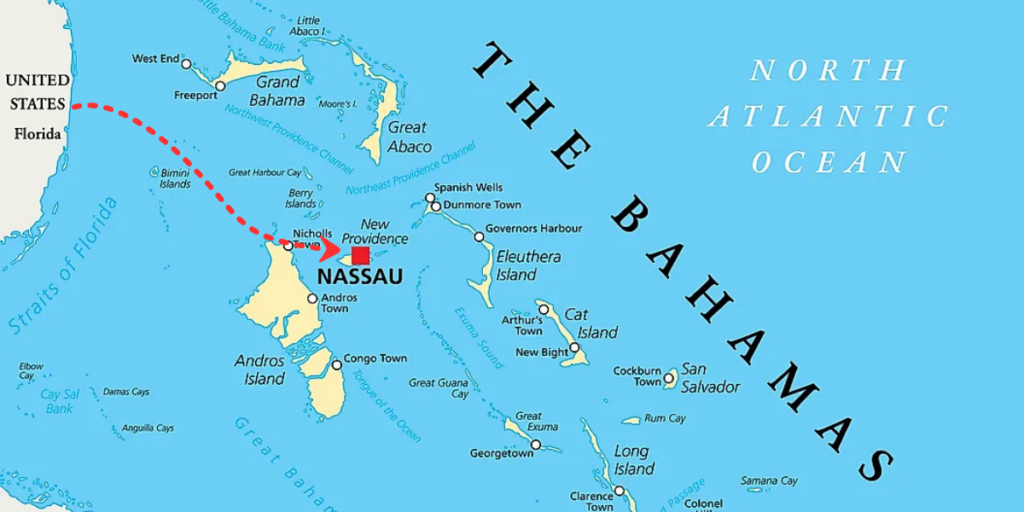
Miami to Bimini (about 45 nautical miles)
Miami to Bimini is the classic weekend hop, and it’s a good baseline for understanding how efficiency translates into flexibility.
At typical planing cruise speeds in the high‑teens, this is a short run measured in a few hours, not days. The significance isn’t that the crossing itself is efficient; it’s that it barely dents your overall fuel picture. Owners can make the crossing comfortably, explore once they arrive, and still retain freedom for additional cruising without planning around refueling.
In practical terms, this is the kind of trip where speed choice is based on conditions and comfort, not fuel anxiety.
Miami to Nassau (about 180 nautical miles)
Miami to Nassau is a more meaningful owner question because it’s a real passage people actually plan.
The mindset shift is important. It’s not just “Can I make it to Nassau?” It’s “Can I make it to Nassau and still have flexibility once I arrive?” That margin is what makes cruising feel relaxed instead of restrictive.
A Month in the Bahamas: The Difference Between “Making It” and “Having Margin”
Leopard 53 PC owners, Nadim and Nayla, share a real‑world example that puts this into context. After spending about a month cruising throughout the Bahamas, they then ran back to Fort Lauderdale, covering roughly 670 nautical miles total, and still arrived with about 200 gallons remaining in the tanks.
Nadim explains, “We did Turks and Caicos to Fort Lauderdale while spending a month in the Bahamas. We had to speed up at times to dodge storms, and we still arrived with roughly 200 gallons left.”
That remaining fuel is the point. It’s margin, the ability to stay longer, reroute around weather, or change plans without pressure.
Nadim also noted that understanding consumption ahead of time changes how you cruise day to day. “We use a model based on fuel flow and tank level to see the remaining range at all times. Speed becomes a choice, not a constraint.”
With solar and lithium onboard, generator use during longer stretches is minimal, keeping fuel usage focused on propulsion rather than hotel loads. The result isn’t just efficiency, it’s confidence.
In practice, that’s the difference between simply making the trip and cruising with options still on the table.
Owner Spotlight: “Speed Choice Changes Everything”
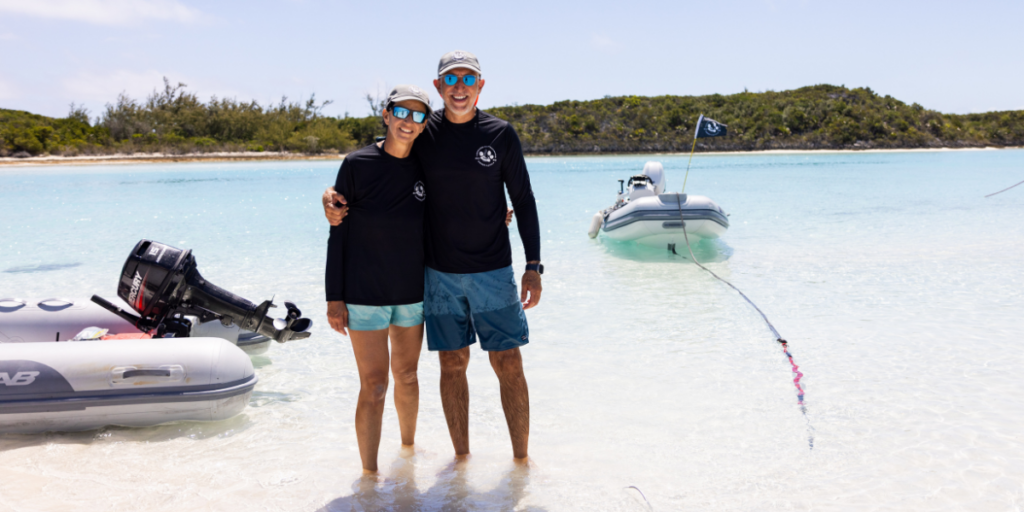
Leopard 53 PC owners, Nadim and Nayla, explain that relatively small reductions in speed can dramatically increase usable range, especially at displacement speeds.
The couple confirms, “Dropping the speed from 8 to 6 doubles the range (or more). We track the remaining range at all times. Of course, it depends on sea state, and it’s more accurate to quote RPM—but the observation of a range exceeding 2,000 nautical miles is pretty accurate based on fuel flow measurement and tank level.”
This illustrates the core advantage of an efficient powercat: owners aren’t locked into one cruising mode. They can choose speed when they want to make time, or slow down to dramatically extend range when conditions or the trip call for it.
Proven in the Real World
The Leopard 53 Powercat’s efficiency and range are not theoretical. Owners have used this platform for serious long‑distance cruising.
Notable owner passages include:
- Panama to the Marquesas, continuing across the Pacific to Australia
Completed by owners Don and Anja Richards as part of a full circumnavigation. During offshore passages, they cruised at conservative speeds to maximize range, relying on their understanding of fuel flow and remaining range rather than headline performance. Read this long-range Leopard 53 PC owner story. - Florida to Europe (Atlantic crossing)
Completed by owner Tom B, who used the Leopard 53 PC’s predictable fuel consumption and long‑range capability to plan the crossing carefully around conditions, speed, and available fuel margin. - Bonaire to the Cayman Islands (approximately 900 nautical miles)
Completed by owner Amie C (Mon Amie), demonstrating that with disciplined speed management and fuel planning, the Leopard 53 PC is capable of extended Caribbean passages beyond typical island hopping.
In each case, these passages relied on managing speed, understanding consumption, and using the boat’s efficiencies, rather than extreme modifications or constant refueling.
The Bottom Line
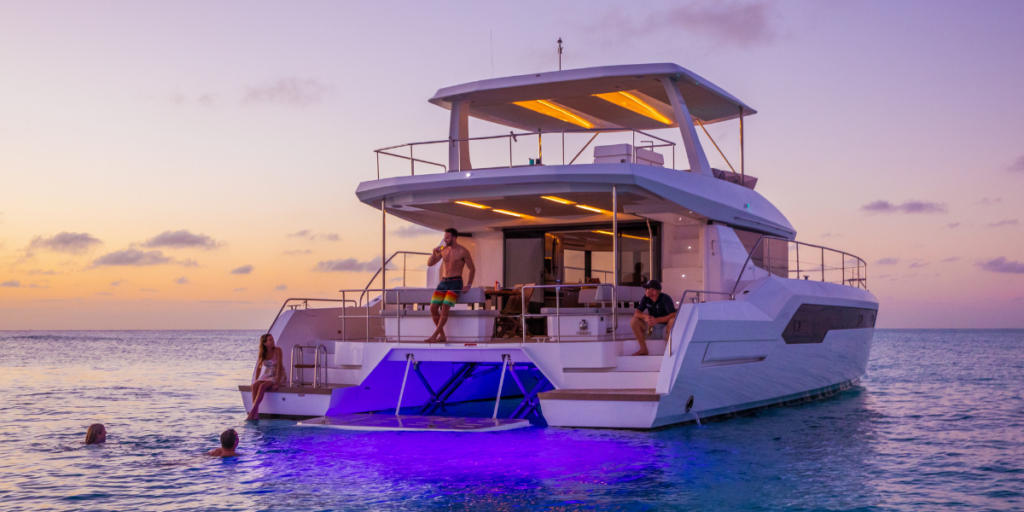
Fuel efficiency isn’t just about burning less fuel. It’s about buying more freedom per tank. That can mean Miami‑to‑Bimini weekends that feel easy, Miami‑to‑Nassau planning with margin, time cruising the Bahamas without your itinerary being dictated by fuel docks, and the ability to slow down and dramatically extend range when the trip calls for it.
For buyers weighing different cruising platforms, fuel efficiency on a power cat like the Leopard 53 PC isn’t about saving money at the dock. It’s about cruising farther, staying longer, and planning trips around destinations rather than fuel availability.
If fuel efficiency and long‑range flexibility matter to the way you cruise, the Leopard 53 Powercat is worth a closer look.